21 June 2006

Some Photos--Errachidia

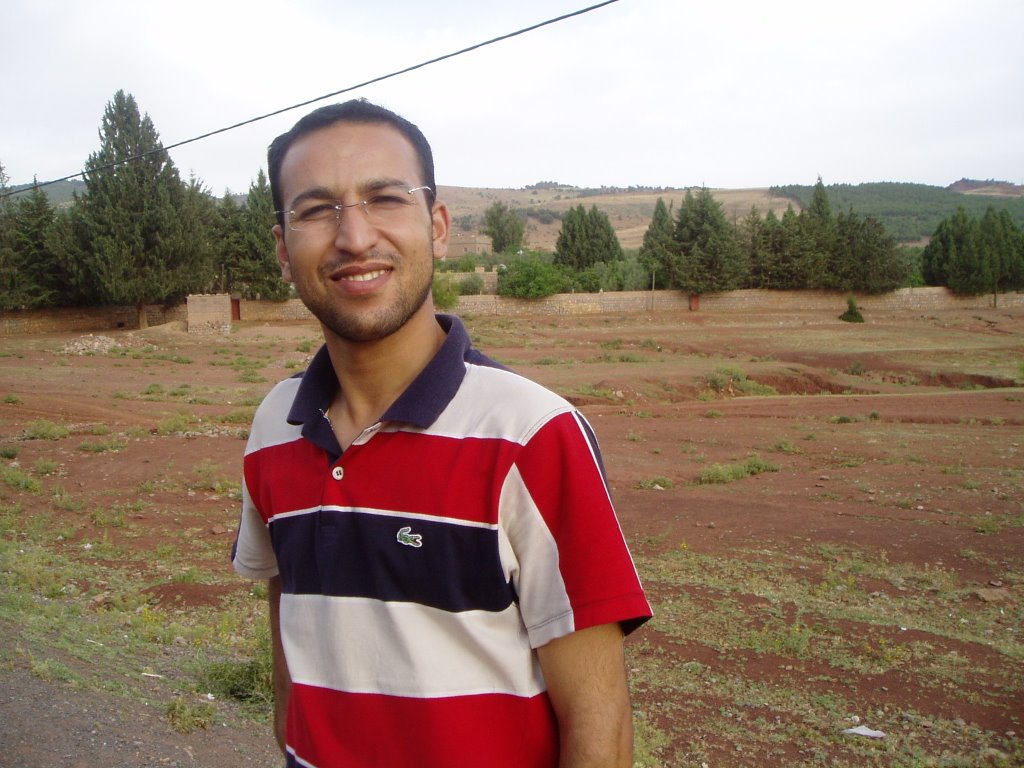
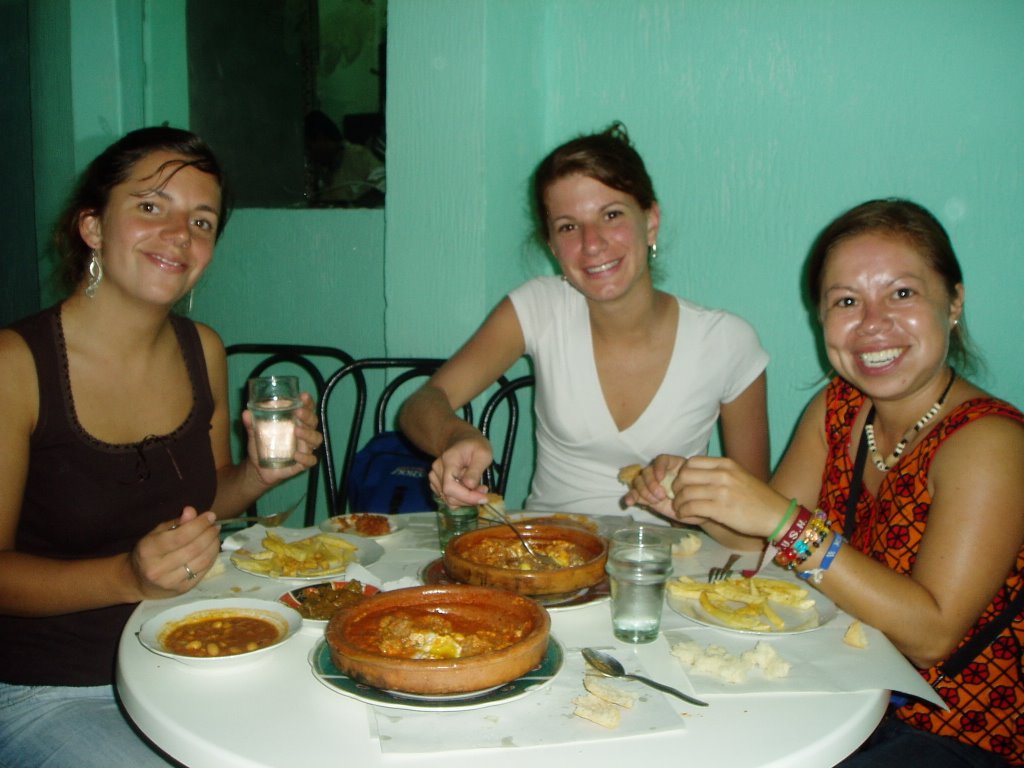
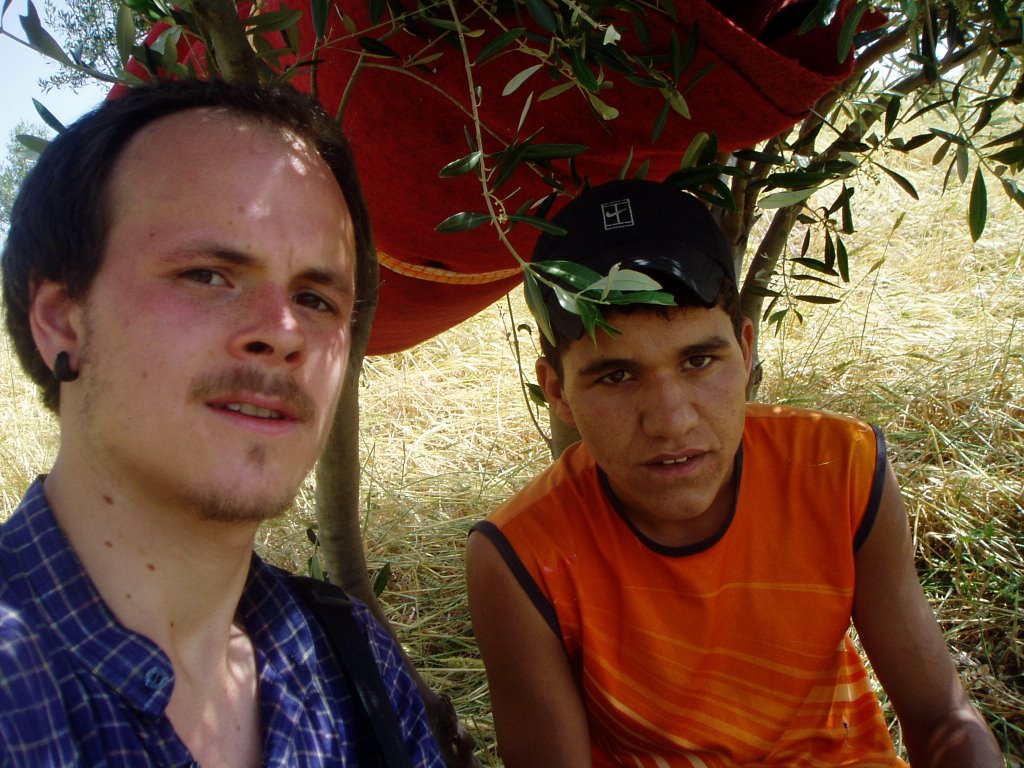
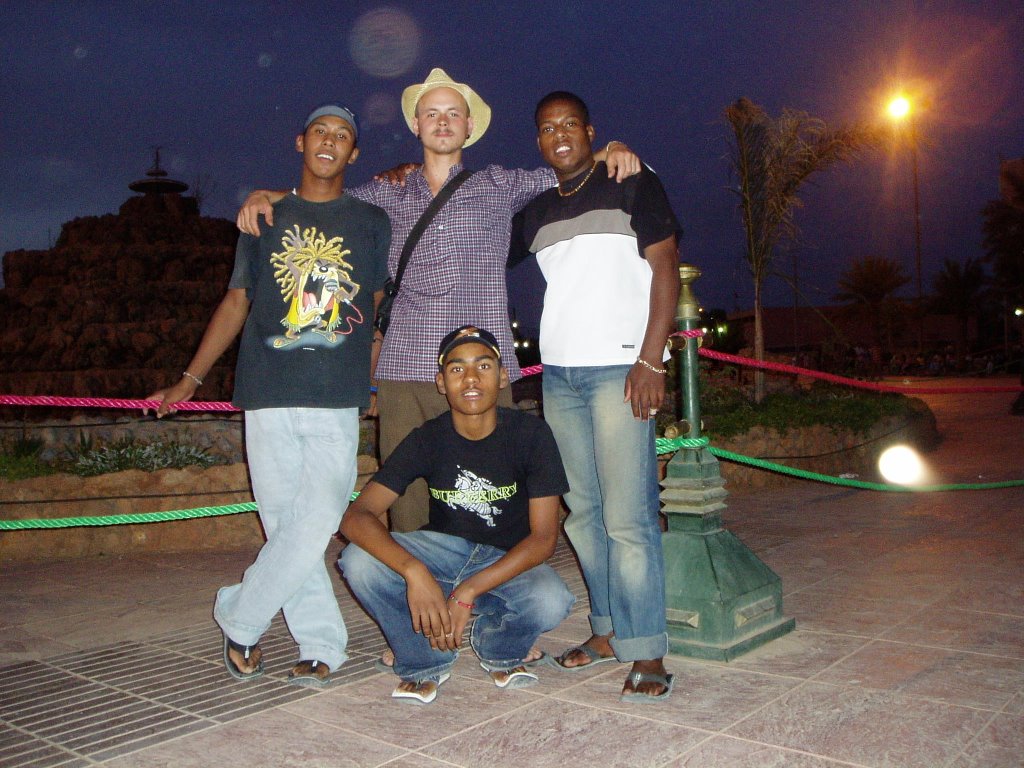
Me and the Boys

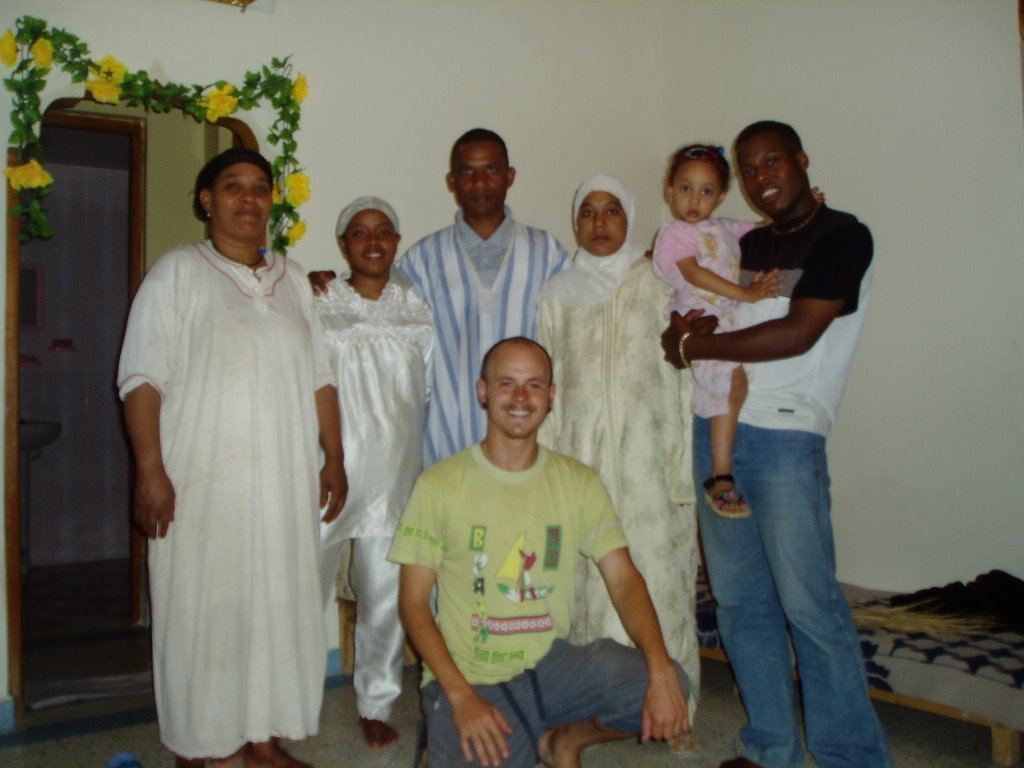
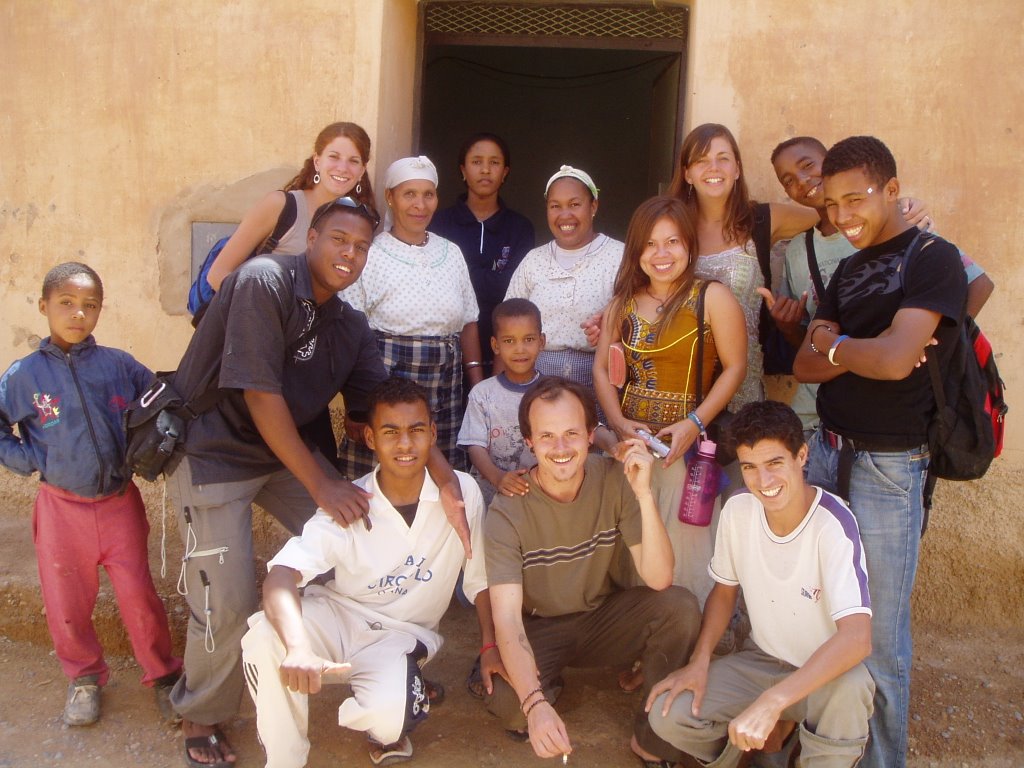
With Abdou, Mother, extended family

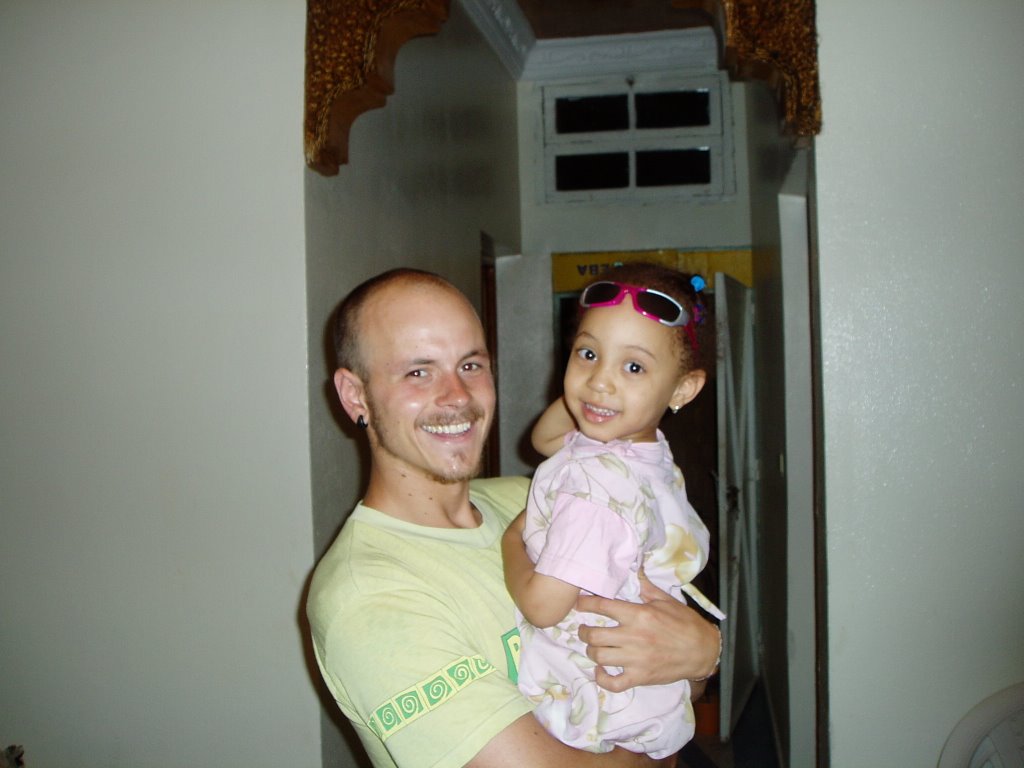
With Abdou's cousin, Abdou's house

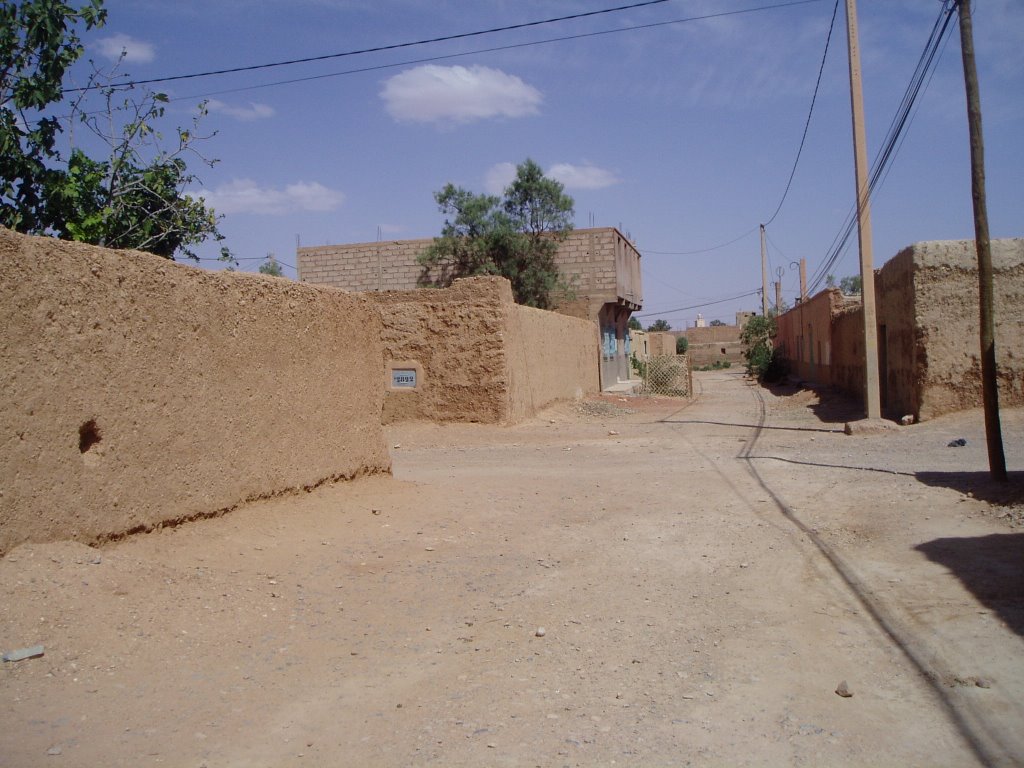
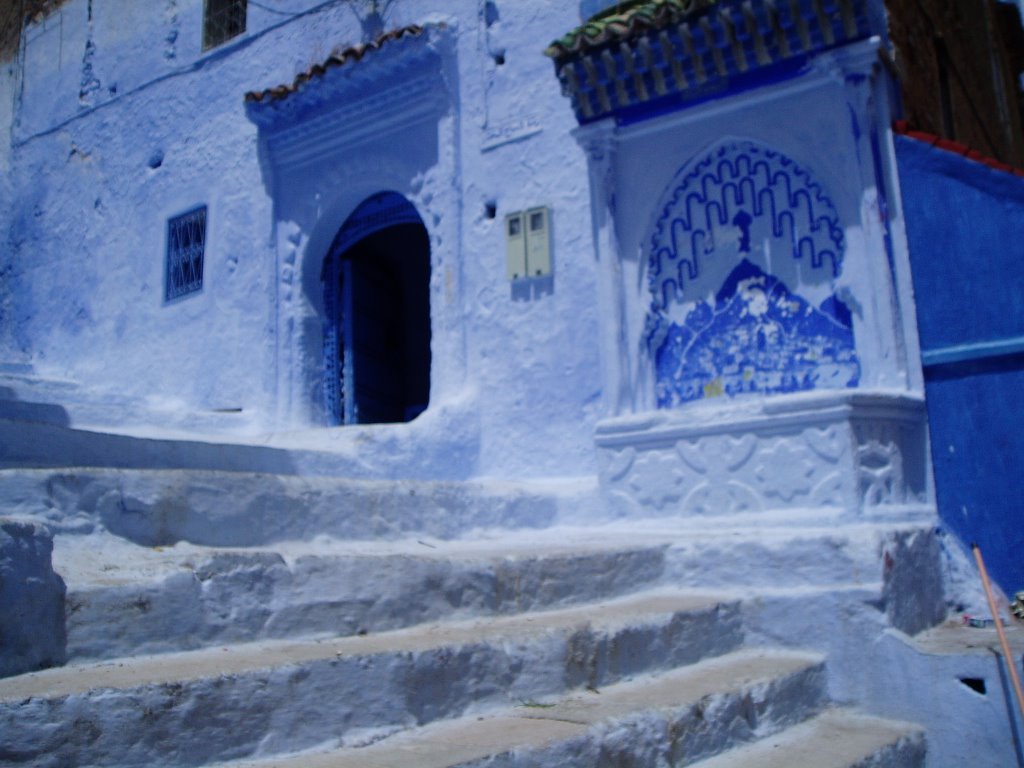
Streets of Ksr El Barrani, Errachidia

Abdou and Hassan

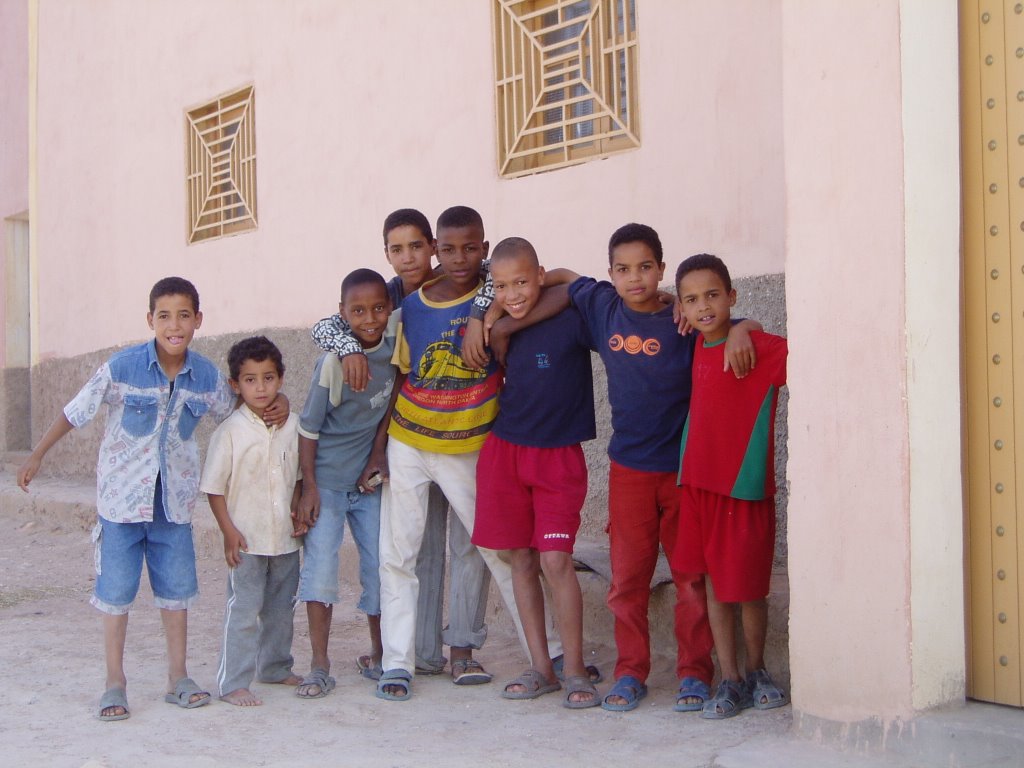
Kids near a Mosque, Errachidia

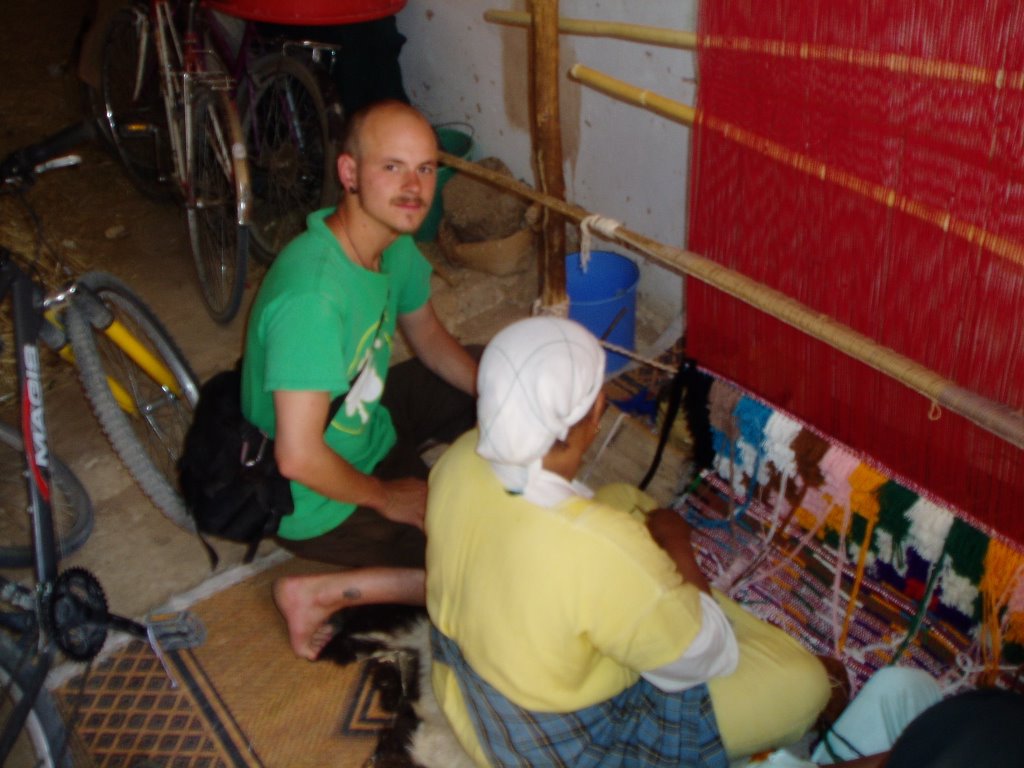
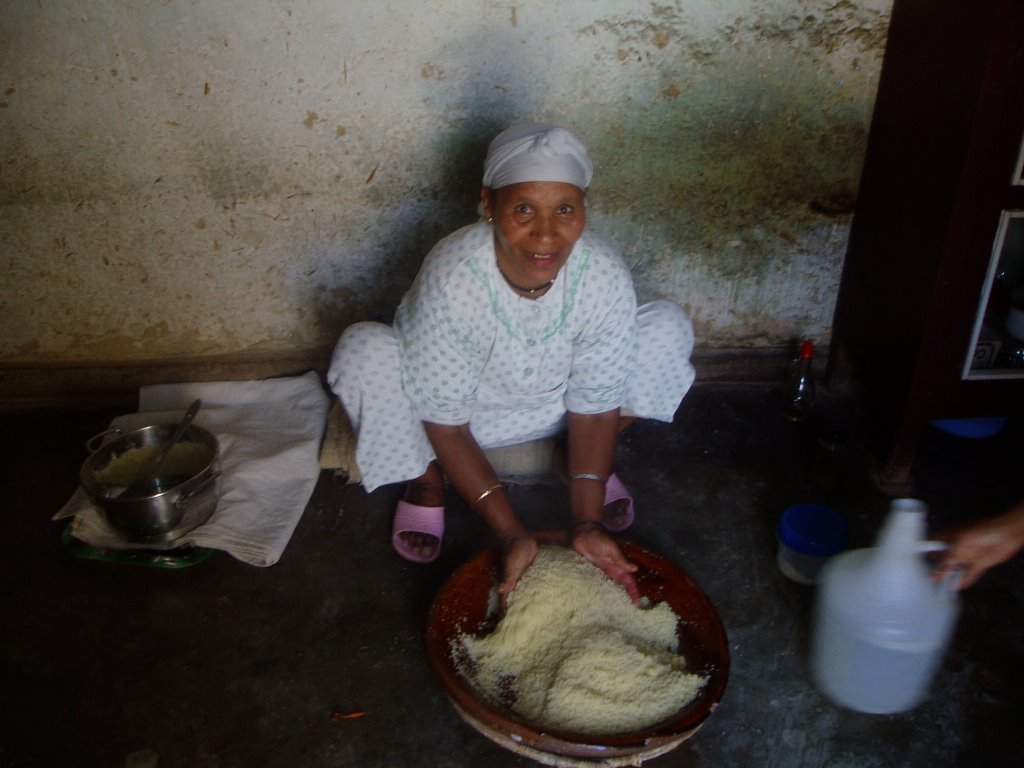
With Abdou's Mother, in the Workshop

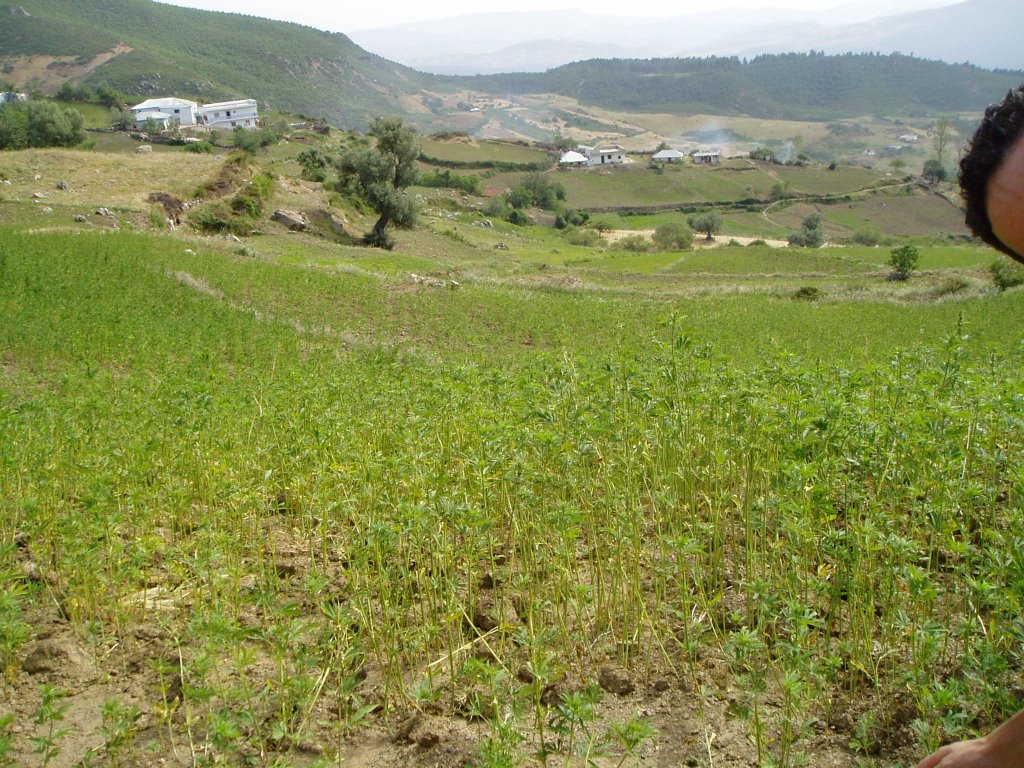
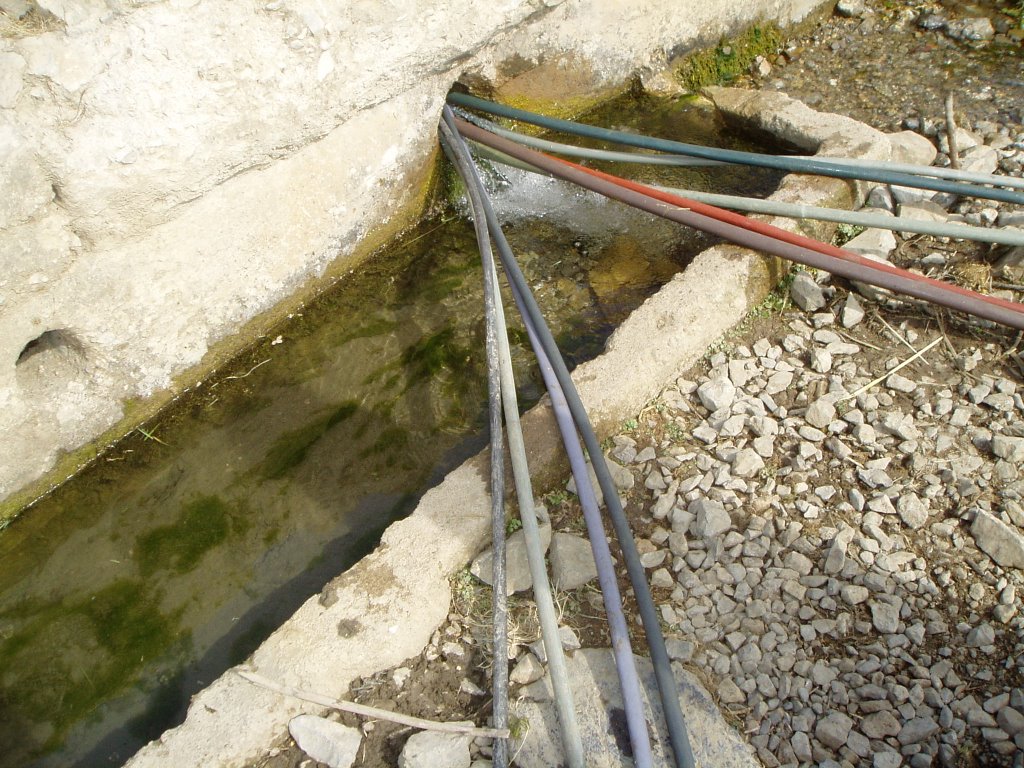
Errachidia

In today's issue:

1. Grocery Shopping
2. Faith
3. Health

1. GROCERY SHOPPING

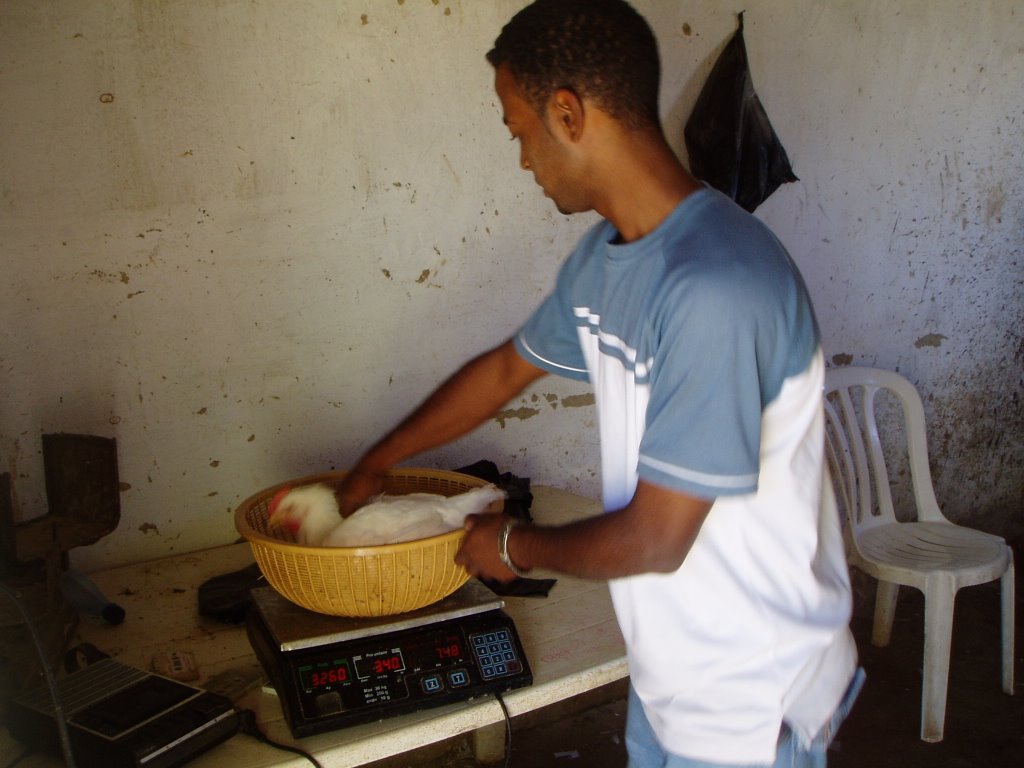
Yesterday morning, Abodu's mother asked him to go and buy some chicken for that afternoon's meal. I went along with him, walking down the street and past the fields of olive trees, finally arriving in a dusty lot enclosed by adobe walls.

Inside the walls, a dog barked and strained at the chain holding him back. A man sat lazily in a chair beside a truck. A boy carried out some live chickens and threw them into a small wire trailer.

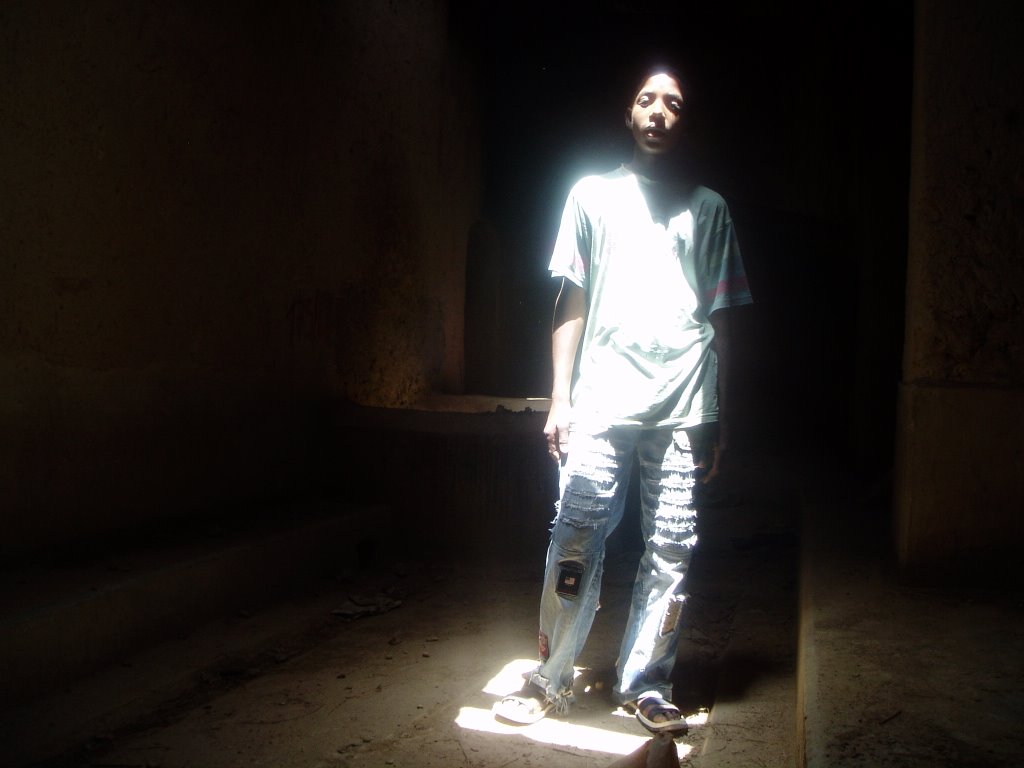
We walked into a shaded room, passing through the only door, looking directly at the only window, from which poured one ray of blinding light. The floor was bathed in blood and littered with chicken feet and feathers. The boy I had seen a few moments earlier asked Abdou how much he wanted.

"Zhuzh kilo" he told him, and the boy picked up a chicken that looked to weigh about two kilos and placed it on the scale, ignoring its protests. He handed the chicken off to a large man in dirty clothes and sandals, who put the chicken between his legs, holding the neck in front of him. Muttering a quick prayer, he sliced its throat and unceremoniously threw the still flapping animal in a large plastic bucket.


After about two long minutes, the chicken stopped moving. The man reached into the bucket, picking up the now bloody animal by its feet and bringing it over to a waiting pot of boiling water. He then dipped the animal in the water and swirled it around for a few minutes. Taking it out, he then cut off the chicken's feet, ripped off the head, and pulled out all the feathers. When he had finished, he dropped the load in a plastic bag, and we went outside to pay.

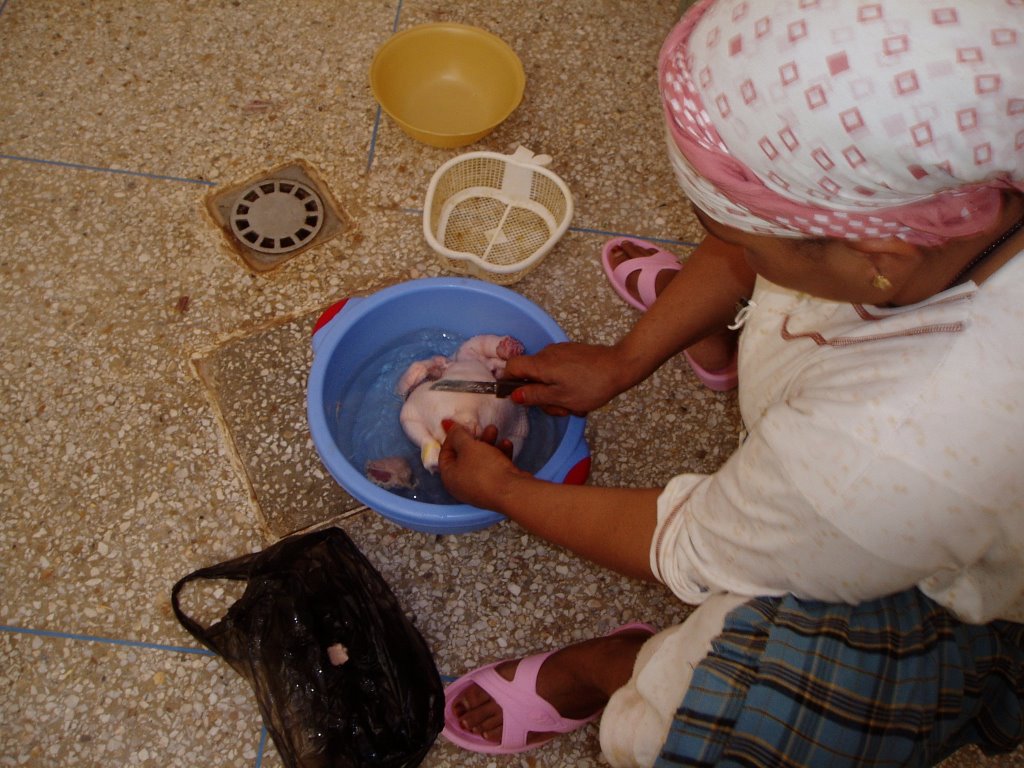
The chicken cost approximately two dollars and fifty cents, and to look at it in the plastic bag you would think it had come directly from the Perdue factory. Within an hour of its death, Abdou's mother had washeds, cut, salted, marinated and cooked the chicken.

Now that, my friends, is fresh food.


2. FAITH

I have really been giving a lot of thought lately to Islam, and faith in general, and I thought that I would share a few thoughts. One of the things that I have found most interesting about Islam, and the way that it works in Morocco, is the way in which faith plays a real part in people's lives.

Faith here is not a question of begrudgingly dragging one's self to church on Sundays or attending a synagogue ceremony a few times a year. Faith here, for the majority of the population, does not seem to be a political issue. It is rather a very constant, comforting and guiding presence that truly defines people's lives and their behavior.

As I have discussed before, much of the cultural environment of friendliness and generosity is a result of Islam. Islam provides rules and guidelines that are meant to foster a certain amount of equality and fairness. The Koran, for instance, teaches Muslims how to take care of orphans, widows, etc, going so far in some cases as to provide percentages of one's income that one should give.

Now, what I have found very strange indeed is that the Koran does not only teach Muslims how to take care of their fellow man, but also seems to be a book of rules about, well, everything.

The other night on television here, Abdou and I watched this older bearded gentleman speak about the Koran. He spoke in Arabic but was based somewhere out of the US, so the program was subtitled in English. Talking all about the Koran, he touched on some subjects with which I wholeheartedly disagreed (for example, the role of women in Islam, or at least his interpretation of this) and on others which honestly just left me really confused, and respectfully amused.

As I found out, for instance, the Koran (like the Torah) provides dietary guidelines. It also discusses how Muslims should eat (using three fingers of the right hand, which one then "has the right to lick") The Koran also discusses how "a man should purify himself after urination" and advises Muslims "not to spend a long time in the bathroom." Even stranger for me were the guidelines on such things as footwear (never wear only one sandal--wear either two or none at all; put the right shoe on first, take the left off first) and bathroom entry (always enter with the right foot, leave with the left).

Now, excuse me, and I truly mean no disrespect to the holy book of millions. But I would love for someone to explain to me why God would take his time discussing footwear with the Prophet.

I don't know. These questions remain to be answered. To be fair, I talked them over with Abdou and Co. and they told me that these are not strict rules. And they also think that women should be able to work, etc, so they don't agree with the TV bearded guy on that question either. There is much to learn, much to read, much to investigate...

3. HEALTH

I have decided to continue with my tradition of occasionally visiting foreign hospitals and clinics. It is good way to see the local population and engage with them in a way otherwise impossible.

In that spirit, I went and got myself and strange and mysterious infection in my thumb, and decided to place on block on my intestines, allowing nothing at all to exit for five or six days.

I undertake such experiments in the name of science. Do not try them at home.

So, I dragged my weighty body and swollen thumb to the clinic down the road from Abdou. It was hot as hell, so I wrapped by head up like a Saharawi. When we got there, neither the doctor nor the nurse had arrived yet. The waiting room was already packed with women and their children. Children with dehydration, children with colds and coughs. New mothers and their newborn babies.

In typical Moroccan fashion, the women rushed me to the front, and I only had to wait a half hour or so. The doctor saw me, laughed with me a few moments about my name (do you have the same profession as your namesake, James Bond?), gave me a few prescriptions, and sent me off to the nurse.

The nurse, a dirty looking guy in sandals, was not nearly as professional as the doctor. He grabbed a needle (sterile, Mom, I promise, I checked it closely, it was new and unused), no gloves, pricked the growing pus filled thumb, squeezed it a bit (mostly for show, I think, since my thumb seems just as pus filled as before), wiped it off with a square centimeter of guaze and sent me off into the world, unbandaged and not much better off.

But, I'll be okay. Abdou too is studying to be a nurse and says he'll wrap me up good. And if not, well, it's just a thumb, right?

Be good, more to come soon.

19 June 2006

Ksr el Barrani, Mdaghra, Errachidia

So here I am, on my second day in Ksr El Barrani, the neighborhood just outside Errahchidia where Abdelahk and friends live.

Things are quiet here, as I said yesterday, but I have by no means been bored. On the contrary, things here are a constant surprise. I feel like a small child in this town, where all social rules and customs are different for me, the language is completely foreign, and the most natural things in the world are to me completely unnatural.

It is an interesting way to be for a while.

Last night, I participated in Muslim prayer for the first time, at the invitation of Abdelhak's cousins.

Abdelhak and I had stayed at his grandmother's house for dinner, and sat around on some cushions, watching television and relaxing. One of his cousins came into the room and asked me if I would like to pray with him. No pressure, just an invitation, which I accepted.

We went to the back of the house, where he taught me how to wash before prayer, which is a very exact science, and not unlike the methods of washing used by Western doctors.

First, I was told to wash my hands three times with warm water that I took from a bucket before me. I then brought the bucket into the bathroom, where I washed my backside and my private parts three times. Returning to the patio, I again washed my hands three times, then moved onto other parts of the body. The methods of washing were quite specific, and the number of times very important. By the end of the whole affair, I had very clean hands, feet, butt, private parts, ears, head, face and arms (to the elbow).

We then moved into a sort of family room, where three of us laid out the prayer mats. I was told to follow along while they prayed.

The singing of the koranic lines was mesmerising, and the truth is that the constant movement of the prayer cycle was nice. I am not sure that I will be converting or participating in any organized religion anytime soon, but as far as all that goes, the experience was a good one.

I have found that many people here in general are very proud of their faith, which plays a very important part in their life. What more, they seem interested in talking about their religion, but not in a pushy way. More of in a "I would love it if you too believed in what I believe to be true, but if not, that's your thing."

------------

This morning I saw a newborn lamb that one of Abdelhak's sheep gave birth to. Cute. As I stood there with the mother, looking at the furry little creature, still wet in birth fluids, I tried to communicate to her my happiness about the new birth..."Thanks be to God," I told her, marveling at the creation of a new life. "Yes," she told me, and made two hand motions--one that mimicked the slitting of a throat and one that mimicked holding money in her hands.

I thought that was funny.

------------

A final note on issues of privacy and personal space here. It is very interesting to note that these concepts do not really seem to exist here. Very few people, even in large houses, seem to have their own private room. As far as I can tell, in many families people change sleeping places on a regular basis, sleeping some days in beds and others on couches, other times on the floor. It seems to be quite normal.

This lack of personal space in the home extends to all realms, and can be both a blessing and a curse. Sometimes I just have to laugh at the whole thing, and accept that this is how it is here...Like today, Abdelhak fell asleep after lunch, and I took the opportunity to head out alone to the internet cafe, leaving him a note telling him where I was. On the way, walking down the dusty, hot street, I heard my name called. "Haj Driss," someone yelled. I turned and saw a guy that I know. We spoke for a minute, and I mentioned where I was going. "Let's go," he said, and off we went.

I sat down at the computer and he sat down next to me. I opened my yahoo and he opened his msn messenger. And for the next twenty minutes, we shared a computer. And then he left, and somebody else took his seat, and then a group formed around the seat. Strange, and sometimes hard to handle, but this is life here and here I am.

And that is all for today, from here in the neighborhood of Ksr El Barrani.

18 June 2006

Back in Errachidia & Small Town Tourist Politics

So, I have made it back to Errachidia, finally, after a couple of taxi rides and an extremely long bus ride.

There was a bit of confusion about the time of my arrival, so I spent the morning gently sipping coffee, warding off drunks at the cafe at the bus station, and eating sandwiches. My friend Abdelhak (Abdou) finally found me (after I made a phone call) sleeping, my head on the table.

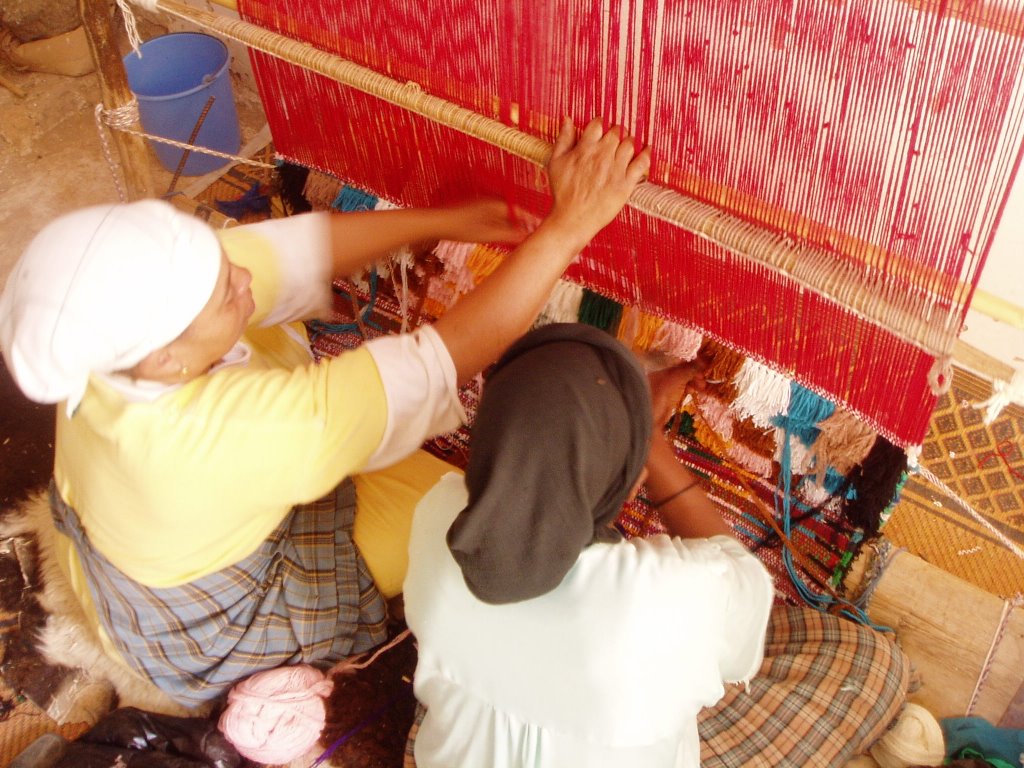
Abdou's family is all here this time, so I have had the chance to meet his mother, his grandmother, cousins and family friends, which is great. What is also great is his mother's cooking, and today I ate the most delicious sardines I have ever had. His mother is also an artisan, and works out of a space connected to the house, weaving blankets on an (to many) old-fashioned loom.


It is hot as Hades here, and dusty and dry, but it is a nice and peaceful place, seemingly without much of the drama that I began to experience in my final days at the Cascades d'Ouzoud.

I am sure that I do not have the time or the environment to write all that needs to be said as a primer to understanding the politics of a small town driven by the tourist trade. I will, however, attempt to give a quick rundown of my own experiences in Ouzoud, and hopefully later I will have the chance to contribute more to the subject.

Basically, in the one week that I spent in Ouzoud, I crossed the line that separates tourist from inhabitant. I do not mean to say that I was accepted completely as one "of them", but in a way the time that I spent there did give me the chance to see much that most tourists would never see.

Imagine this--I spoke with some Italians that had been to the falls about 20 years ago. They tell me that the area was empty...not the surrounding area, which is filled with quiet farming camps and the like, but the area immediately around the falls, which is today packed with restaurants, cafes and bazaar-type shops. And so, the area around the falls is basically a frontier town, populated quickly and rather haphazardly by people looking to cash in on a rising tourist invasion.

Tourists, especially Western female tourists, are the gold of this community, and are therefore jealously guarded. Any seeming attempt to "steal" somebody else's "merchandise" is considered an extreme fault. Thus, as I noted and learned rather quickly in my last few days, there are certain subtle rules, norms, etc that must be followed.

I discovered this one day while swimming with a friend, a local, at a nearby "swimmin' hole' (god it feels good to say that). We saw, nearby, some English girls swimming, while their guide tried to impress them with his (honestly quite impressive) feats. He jumped off the tops of trees into the water, made dangerous dives and flips look easy, and the like. Anyway, I began to talk to them, as one tourist often does with another tourist. We had a bit of a conversation, my friend and I left, and that was that.

Later that day, walking up to the top of the falls, another friend of mine and I saw the same girls sitting at a cafe. We stopped and joined them, ordered a tea, and chatted with them for a while. At some point, their guide from earlier that day passed by and the girls said hello, as did I.

By this point, I had been told by various people something about the rules about talking to other people's "girls" but I honestly figured that I did not figure into this equation, as I too was a tourist....

Anyway, point is that I was wrong. I had passed the line between tourist and local; to some extent, and was therefore expected to follow the rules like other locals. I ran into the guide that evening. He was an ugly man, strong and toothless and brutish looking. He called me into his cafe, breathing on me the fumes of the mehhya (an illegal fig moonshine) that he had been drinking all day. In words that I could barely understand, in a mixture of French and English and Arabic, he made his point very clear:

Stay the f--k away from my girls or I will hurt you.

I assured him that I would do exactly that, and had no intention of talking to his ladies in the near future.

Problems like this, I soon discovered, are inherent to a place like Ouzoud. Locals work hard to disguise this from tourists, obviously aware that the more that they preserve their image as a peaceful haven for hippies and potheads, the more business they will all have. This does not mean, however, that beneath the pacific surface of the town does not lie a bubbling, alcohol stinking, possibly dangerous, and ultimately fascinating mess.

It was with this new knowledge in hand, as well as my new status as enough a local that these things need not be hidden from me (although who knows how much more still remains hidden) that I witnessed an argument over a pair of sunglasses nearly end in fisticuffs. I also saw money thrown angrily to the ground twice in one day.

This is not a side of the town that one sees in a day, or even two or three, and it made it very clear to me the ways in which appearances can be very deceiving. It also made it very clear to me that the work of an anthropologist must be extremely complicated and filled with constant pitfalls. Learning the rules, and learning to avoid making enemies while making friends and contacts, must be a truly difficult position to hold.

Anyway, I have written much more on this subject, which I find fascinating, but I must leave now to go off with my Errachidia friends. I hope that all are well. More to come soon, to be sure.

15 June 2006

Still in Ouzoud


Well, inertia and a sense of comfort are powerful things.

I was meant to leave for El Jadida yesterday with Abdelhak, to meet the other members of his department and discuss possible teaching opportunities. While I am very excited by this idea, the whole planning of the trip just became too much for me and I decided not to go. Had I gone, we would have left at nine at night, stopped for the night in a Marrakech cafe, and continued on in the morning. This just seemed too much for me, so I will stop by the University on my way to Spain at the end of the month.

And so I stayed here at the waterfalls of Ouzoud, where everything is moving as slowly as always. I have been hanging out with a guy here, Abdul Hafid, and his friends, all of who work as guides in the area.

The whole guide culture is very strange...They are called faux guides (fake or false guides), as they are not recognized or licenced by the government. And so, guides must run toward buses and taxis, offering to all tourists their services. Prices are not fixed, and always originally run high. The tourists, of course, pay as little as possible.

What is very strange, and quite interesting from an anthropological standpoint is the way in which the tourists both create and disturb the local life. A guide with three foreign tourists, for instance, brings his clients to the restaurant of his choosing for lunch. He must decide where to bring them...but this is no easy task, as he knows everyone in the village. Does he bring them to his cousin, or his brother, or his friend? And so, here in Ouzoud, everyone is friends, yet everyone has people with whom they are angry, and everyone owes or is owed a favor. The network of social connections is confusing and complex.

I am now once again staying down at the bottom of the waterfalls in a campground there. I was staying at the Source of the river, but left as I had planned to leave with Abdelhak.

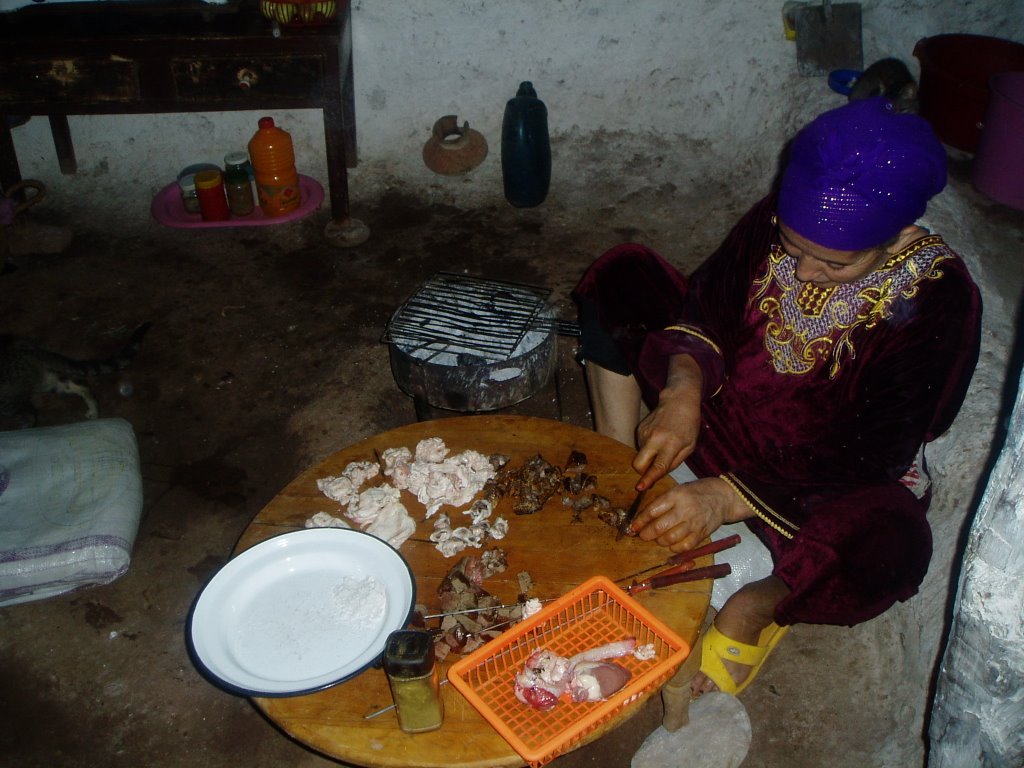
The Source was a truly amazing place. On my second night there, I was invited to eat with the family of Said, the young guy that seems to run the place (although this was never made absolutely clear to me...everyone seemed to claim ownership). When I arrived at their house, the mother and daughter were just beginning to make the meal, and as Said had to leave for a moment, I joined them to check out their cooking techniques.

While the mother got together coals from one of the many endlessly burning fires, the daughter got to work on the meat, bought that day at the local market. The family is Berber, and the women speak no French, so our conversation was quite limited, and yet we somehow understood eachother quite well. I would point, for instance, at the meat and make a noise like a sheep. The women would laugh and say the word for sheep, which I would repeat. We would all then say "muzzien" (good) and have another laugh.

The food that they were making turned out to be delicious, but at first sight it was really nothing to speak of. They made a simple tagine, as usual, but also prepared some shishkabob type things by wrapping sheep kidney in strands of intestine. These tasty little morsels were then grilled on the open fire.


Their cooking area was an incredible place with floors of packed dirt. One wall was the mountainside and the others were made of bamboo stalks and mud. Half of the large room was covered with a ceiling made of a similar material to the walls--the other half was mostly open, protected from the elements by only a criss-crossing of bamboo and the grapevines already heavy with grapes.

The women cooked crouched down on the floor, cutting the meat with an obviously often-used knife, shredding the flesh with expertise, all the while stoking the coals, heating water for tea and preparing the table. Alongside the cooking area was the true kitchen, a cavelike room of packed earth lined with sagging shelves filled with jarred spices, plants and olives. In the corner was the blackened wood oven, built into the dirt of the room.

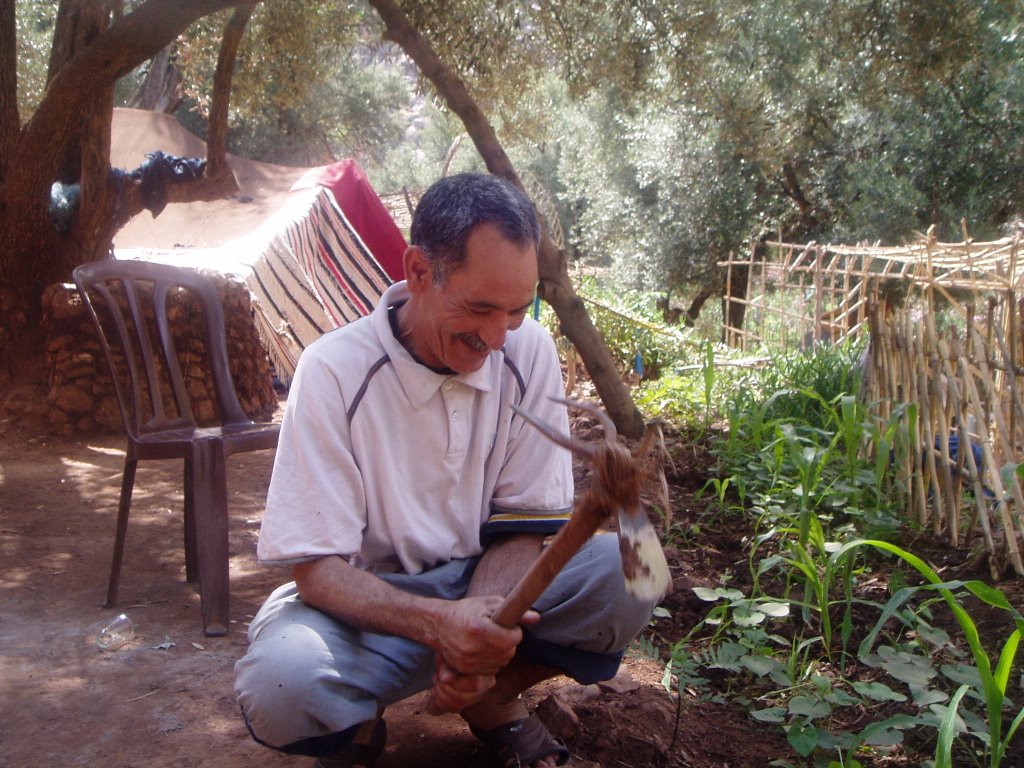
As they prepared the food, Said and the dayworkers began to stream in and sit down, lighting cigarettes and talking quietly. In walked Said's father, Olaid, a man said to be only fifty, but who has the face of a seventy year old man. He held aloft a bulging package and declared that he had walked twenty kilometers to get his kif. He looked anything but tired, and was obviously happy to have replenished his supplies of the local herb.

He sat down and immediately got to work on making his kif smokeable, separated the leaves from the stalks and mincing them on a plank of wood, smoothing the pile occasionally to check the consistency, until finally he had a large pile of a nearly dustlike substance. With neither haste nor wait he packed his pipe, smoked it, and exhaling, popped the spent embers onto the ground. He immediately packed another and another and another. He was soon once again laughing heartily and talking about his favorite subject, the natural origins of everything around us.

Kif? Naturelle. (big smile)

Olive oil? Naturelle. (big smile)

Olives? Naturelle. (big smile)

Everbody? Naturelle.

This was Olaid's favorite subject, and mine too, as we could understand eachother in few other subjects. I immediately added my own commentary to the conversation, bringing up the donkey we had ridden into town that day.

"Quatre Quatre Berber?" Naturelle.

Here we both laughed, enjoying the local custom of calling donkeys four wheel drive vehicles. We continued, listing all of the things that a Berber Vehicle does not need.

No Gas
No Oil
No Key

Naturelle.


Riding the donkey had truly been a thrilling experience. As Olaid told me, the vehicle only had two seats, and I sat on the back sidesaddle, occasionally ducking to avoid low branches, bouncing endlessly and holding on tight so as to not fall off. Along the way we passed other donkeys and always stopped to exchange the nearly endless greetings of the area.

Assalamulakum. (peace be upon you)
Alakumassalam. (and upon you)
Beher? (good?)
Labas? (good?)
Beher. (good.)
Hamdullah. (thanks be to God)

We finally ate, although the women continued to sit in the corner of the room, preparing food for the other campers staying the night. After dinner, Said asked me to play guitar, and I did. The whole family looked at me strangely afterwards, which was a bit disconcerting until I tried to imagine the scene in my own house if I brought some strange Berber guy into my house to play some strange instrument and sing in a strange language. The looks, I imagine, would be quite strange.

And so now, here I am, still in Ouzoud, spending my days in odd errands, letting myself be taken along to find this guy's thresher, or this guy's money, or to see the other guy's house. The loops are endless and exciting, in a strangely bored sort of way. The land is beautiful, at times ridiculously dry, yet seems as fertile as the Nile Valley, and everything that springs from it seems strong and vibrant, and of a green color that nearly hurts the eyes.

I will leave soon for Errachidia, as I have a promise to keep and friends to meet. Until then, here I sit, whiling away my time by the riverside, falling asleep to the sound of waterfalls and birds and animals of the land.

There is so much more to tell, but there is more time to come, so for now I leave you. I hope you are all well.

13 June 2006

HUH?

I do not have much time to write at the moment, so let this short message suffice until I have the time to sit calmly and write with tranquility.

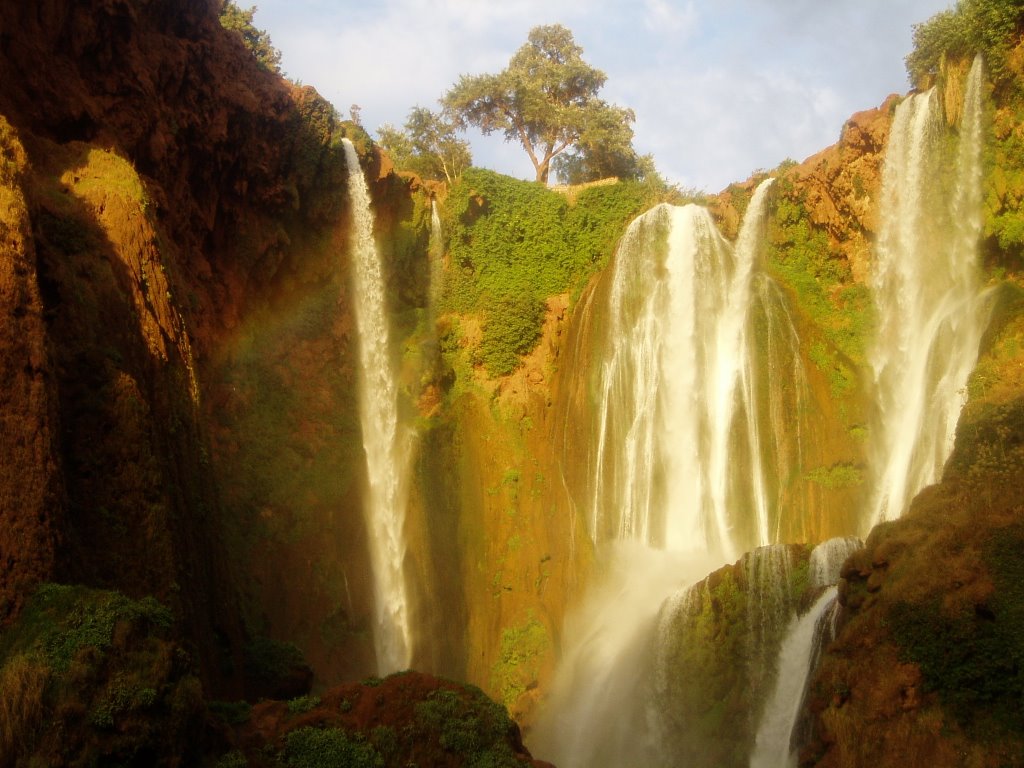
I left Marrakech the other day and met a student of English who studies at a University in Marrakech. He (Taoufik) invited me to his home, where I spent the night and the next day before heading off for Les Cascades d'Ouzoud; a beautiful place in the Atlas Mountains.


I have been moving around the area, changing places every night, spending some nights at campgrounds with beautiful views of the waterfalls, other nights farther away at the source of the river that leads to the falls.

I have met some wonderful people, and oddly enough I met a professor of English from El Jadida that seems to think that he can get me a job at the University. I may be heading up that way with him tomorrow to have an interview with the Dean and the Chair of the Department. Strange.

Inshallah.

Some other quick highlights of the last few days...a bit of a taste of the things that I would love to sit here and write about for hours and hours...

- I met some Moroccan prostitutes, but found it so difficult to read the generally easy signals that let us know when a woman is employed as a lady of the night. Apparently when she grabbed my hand and rested her hand on my knee I should have known. Two obvious signals, or so I have been told by the guys that were with me. I only finally picked up (with no doubts) on all of this when one guy asked me (in a rather colorful fashion) if I would enjoy engaging in sexual congress with them that afternoon. I replied in the negative.


- I visited the English Professor's (Abdelhak) family home. The place is no longer inhabited, but it is hundreds of years old and is currently undergoing a very slow restoration. His grandfather was apparently a very important man, and from what I understood, the black people in the town are the descendants of his grandfather's slaves. What century is this again?

- I spent last night (and will spend tonight, if I can find my way back) at a campground at the Source of the river. Oddly, the guys that run it are sort of friends of mine from the Sahara. I met them over the winter. The place that they run is on a beautiful piece of land that abuts the river.

I arrived yesterday to a reception that I will not soon forget. After being given the tour, I was set down with the man that owns the land. His wife brought over freshly baked bread (made in a clay oven with open flames), olives and olive oil from their trees, and hot mint tea. The old man sat there puffing away, smoking first kif (marijuana) from a pipe, then switching to a few hash joints to shake things up a bit. We just sat there, eating and talking about the beautiful things around us, thanking God (Hamdullah - a very common phrase) for it all.

The place is beautiful, and everything is so natural as to be truly enchanting. The honey is from the bees behind the house, the olives are from their trees, the figs are from their land, the tea is made with spring water.

Waha. I cannot remain much longer in the internet cafe. I have taken what is called a Grand Taxi from Ouzoud. Unfortunately, les grandes taxi only run when they are full, which I fear may take some time at this hour.

I wish all well, I will write more soon when there is more time.

09 June 2006

Magic Words

My friends in Errachidia, worried for my education in the Arabic Language and my comfort on the streets of Morocco, taught me one very important phrase.

Lesehell.

I have no idea how to spell it, and very little idea what it means. I only know that if someone asks you for money on the street, you should tell them "Lesehell".

The word, like most greetings and the like in Arabic, speaks of God (in Moroccan Arabic, the first A seems to often be minimally pronounced, so perhaps the word is Allahsehel or something like that), and I imagine that it means something like, "I have no money to give you, but don't worry, Allah will take care of you."

Or something like that.

Anyway, these friends of mine tested me constantly on my use of this word, sneaking around corners and suprising me with sudden requests for money or food. They asked family and friends to beg money from me, all just to hear me say "Lesehell".

Once here in Marrakesh, back in the real world, where real beggars beg for real money, I had a chance to use the word on my own. I was a bit worried, as it is a bit strange to go around saying things when you don't really know what they mean....I mean, maybe these guys had taught me how to say something really terrible and insulting...

However, all my fears were erased with the first dirham request by a small child here in Marrakesh. He asked for a dirham, I signalled my empty pockets and pronounced the magic word. He smiled and laughed, and repeated the word, and shook my hand. I think that he was thanking me for not giving him anything.

It goes without saying that I was a bit surprised by this reaction, and resolved to "Lesehell" the hell out of anyone who asked me for money for the rest of the day and get to the bottom of the mystery.

It works like a charm...It is incredible. I have never ever before learned a word that, pronounced quietly and with care, can actually make someone smile when you have given them nothing. In some cases, I have become so endeared with the person after our shared smile that I have in fact stopped to give them something. Which I guess sort of takes away the whole point of learning the word, but whatever.

Anyway, I have studied almost no Arabic. I do not know numbers or verbs or, well, almost anything for that matter, but having learned fifteen or twenty phrases and words has totally changed my experience here. People are so appreciative and seem to find it really crazy that a little white guy can say "hello, how are you?" and "I'm fine, thanks be to God".

Which is really pretty sad, since learning what I have learned has cost me neither time nor money nor effort.

Well, I'm off to the street to head back to the hotel and "Labas" the clerk until we are both "Hamdullah"-ing like a couple of crazy fools.

08 June 2006

Leaving Marrakesh


Sumbitch, it is hot. Really hot. Like "oh crap, I hope I don't faint" hot.

I've decided not to head out to the beach with the Argentine girls, so as of tommorow I'll be heading off alone, slowly working my way back to Errachidia by way of some waterfalls along the way.

I visited a Moroccan bar for the first (and most likely last) time the other evening. Such a strange place.

We walked in the door of a Pizzeria that the taxi driver recommended. The people at the door gave us strange looks. "Would you like to eat," they asked, "or just for drinks?"

"Just for drinks," we told them, and indicated that we would head to where the rest of the people were, upstairs and through a closed door from behind which we could hear loud music playing.

They looked at us even more oddly, seemingly surprised that we wanted to have a drink where the Moroccans drank, and not sit alone in the unlit restaurant area.

Oddly, there were women in the bar as well, and they did not appear to be prostitutes, although they were certainly not your run-of-the-mill Moroccan women. The place was mostly populated by men, drinking and somehow talking and understanding each other over the incredibly loud music.

The music sounded like most popular Moroccan sounds to me. My untrained ears seem to hear all Moroccan songs as one long song occasionaly broken up by a moment of silence.

The band was two people--a guy on the keyboard and a singer. The singer would walk all around the bar and say hello to people as he sang. He would sit down at tables in dark corners and continue to sing without pause.

The waiter kept on bringing us plates of fruits and vegetables. At first I scoffed. Then I scarfed (them down).

That's all for now. I hope that all are well.

06 June 2006

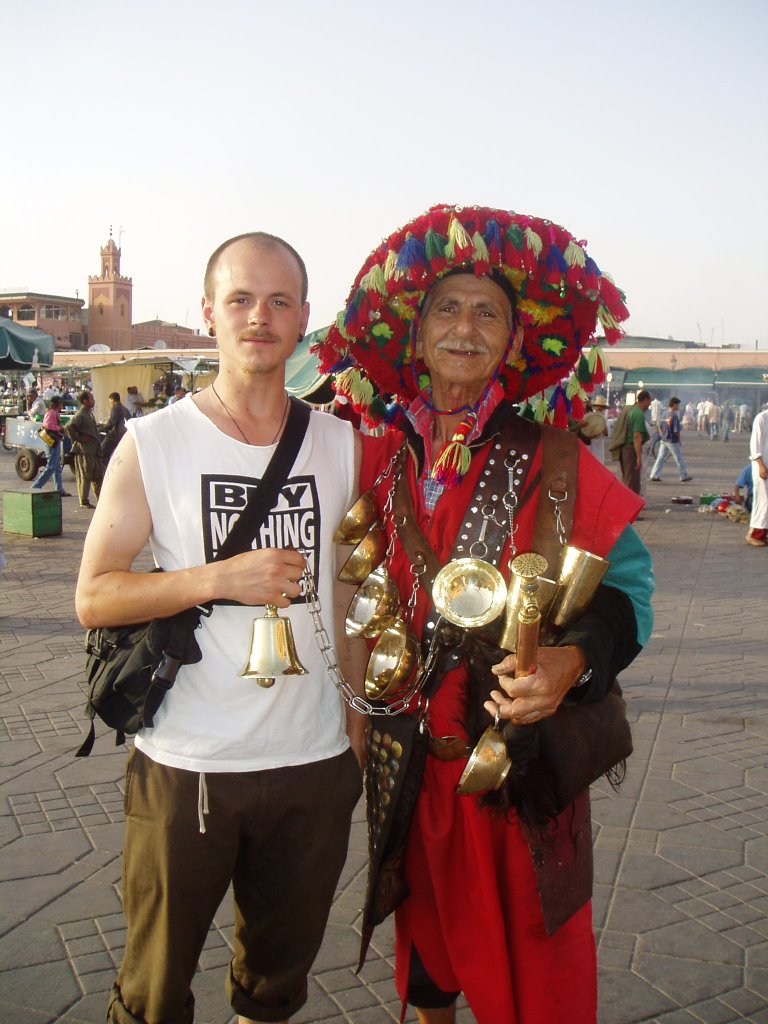
Christophe, Freksh, Driss, and I (NOW WITH PHOTOS)

Recipe for a Typical Moroccan Bus Ride:

1 Rickety Old Bus
1 Clinically Insane Bus Driver
10 Ridiculous stops in the middle of nowhere
12 hours
1 Bitter, mean bus attendant
1 Glue sniffing maniac at 3 am stop (optional)
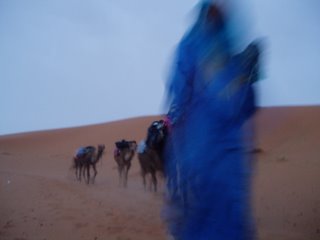


I arrived in Marrakesh yesterday morning at 8:30. It feels strange to be here, considering that I was here just a few short months ago. Little seems to have changed but the temperature, which is now at about 42 degrees Celsius (approx. 108 degrees Fahrenheit). Djeema El Fna Square continues to be a totally insane shock to the senses, packed with snake charmers, henna artists, fruit hawkers, pickpockets, water salesmen, story-tellers, and guys with monkeys.

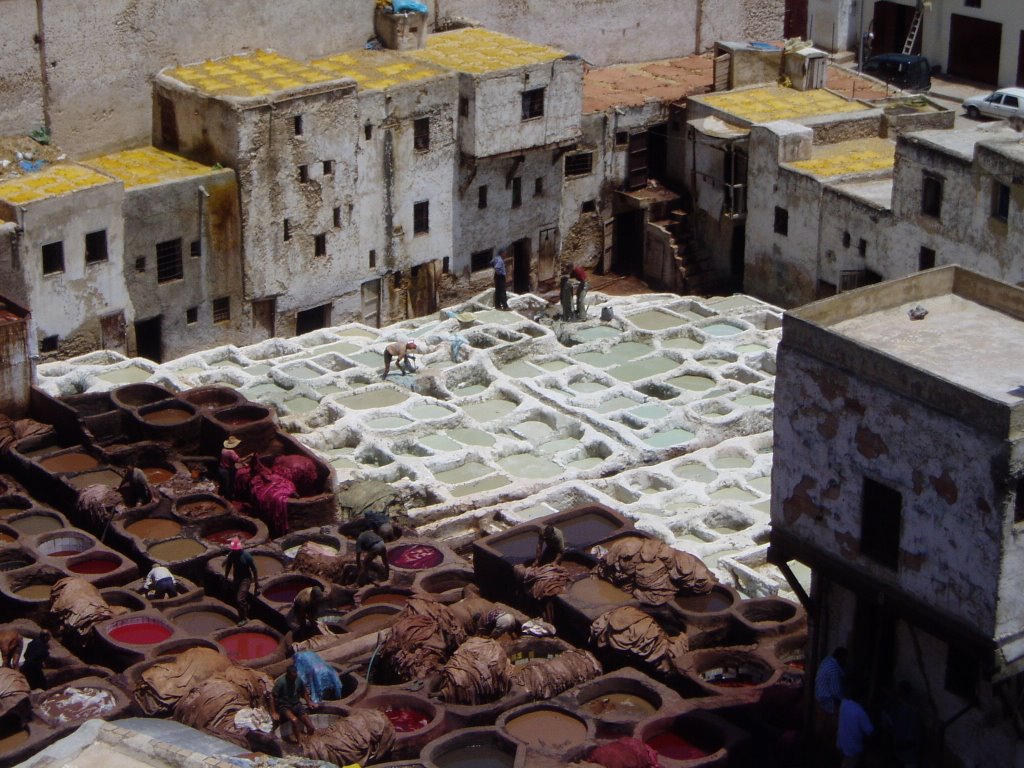
The last few days have been filled with strange adventures of the type for which I always yearn and seldom experience. I spent a few days in Fes, and took the time to visit the Tanneries where people continue to dye and work all types of leather with traditional processes.
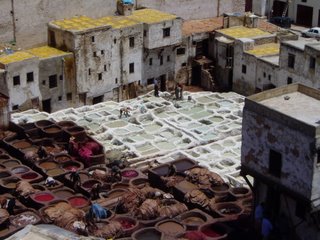


These processes are incredibly archaic, and the sights, smells and sounds emanating from the entire operation are in their own way both jarring and inviting. Viewed from above, the tanneries spread out beneath the viewer. Men wade in giant vats of colored liquid, pulling hides from large piles and running them through the dyes.

The dyes themselves are made from such ingredients as pigeon shit, animal urine, and natural coloring. The smell is horrible, and most stores in the district give visitors a sprig of mint to hold beneath their nose as they browse the shops.

Leaving Fes the next day, I headed off with Sol, Veronica and Rosangela in the direction of Merzouga, a town most famously known as a gateway to the Sahara and the dunes of Erg Chebbi.

I had been to these dunes before, having visited this part of the Sahara in January, but I was excited to go back again, knowing that the pacific feeling that I experienced last time in the desert is something for which I will always search and to which I will always return.

Things in the desert started out terribly. Rather than going to the same place that I knew from last time, we decided to head to a different place, nearly dragged along by a tout that assured us of our need to go to the place that he knew. We acquiesed, and when we arrived, everything felt wrong.

Imagine: In the middle of the desert, in a place only reachable on foot, by camel, or by the local Land Rovers, one lives only by the grace of those with all that one needs. He with the water and the food and camels and the shade is boss. In short, as many have said; "te tienen por los cojones." I imagine that no translation is necessary to express the sentiment.

And did we ever feel this power imbalance. Lunch was super expensive, water was expensive, changes in our intinerary were expensive. There was no need for subterfuge or hiding of intentions. We were being fleeced, screwed, and robbed, and there was nothing we could do about it.

And still, I took a deep breath, put things in perspective (the three dollar omelette was not, contrary to popular opinion, going to put me in the poor house anytime soon), and calmed down. I was not going to let anything ruin my time in the desert, in the middle of endless rolling sand dunes and an endless sky.

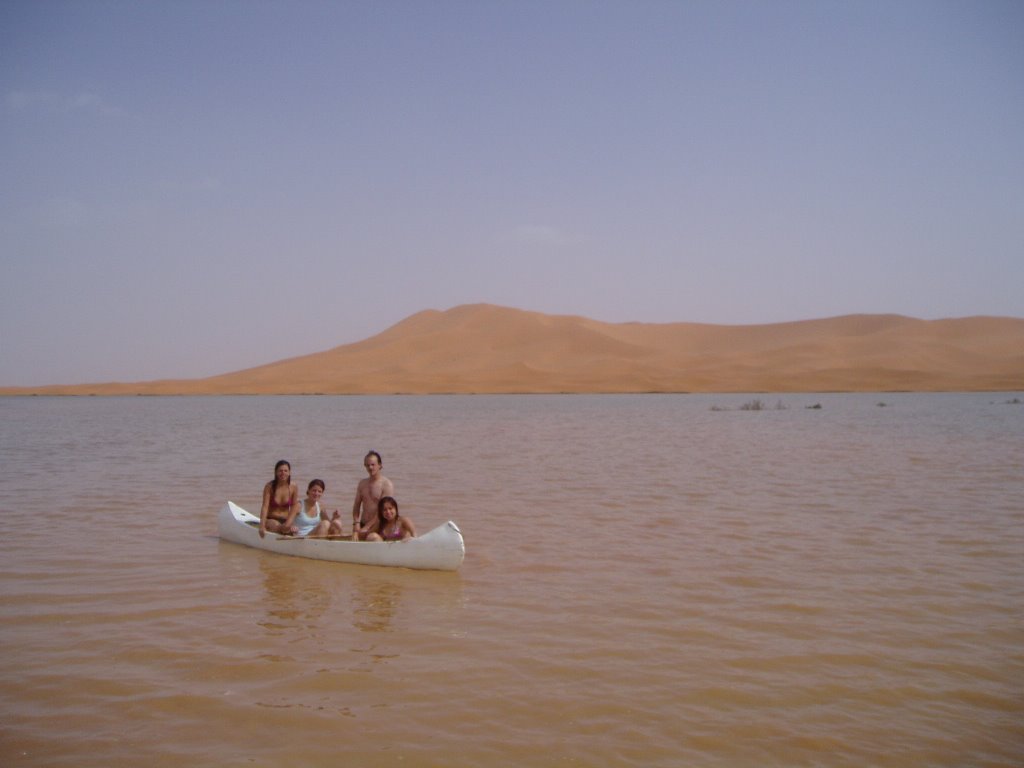
Luckily, things turned out more incredible than I could possibly have dreamed. A recent freak rainstorm had flooded the region a week before we came. For many, living in the difficult, dry terrain, this rain was an obvious blessing. For others, including the four that drowned in a nearby hostel, the man that was electrocuted, and the many that lost their houses, the rain was anything but a gift from above.

For us, and for all those lucky enough not to lose a home or their life to the torrents, the rain was a wonderful gift, and allowed us the strange experience of swimming in a temporary lake in the Sahara. The last time a similar thing occured was five years ago. Before that, fifty years passed without this type of rainstorm. Oddly, some visitors a few years ago visited with a canoe and left it behind. Lacking a proper paddle for the craft, the locals improvised with a push broom. We did the same.


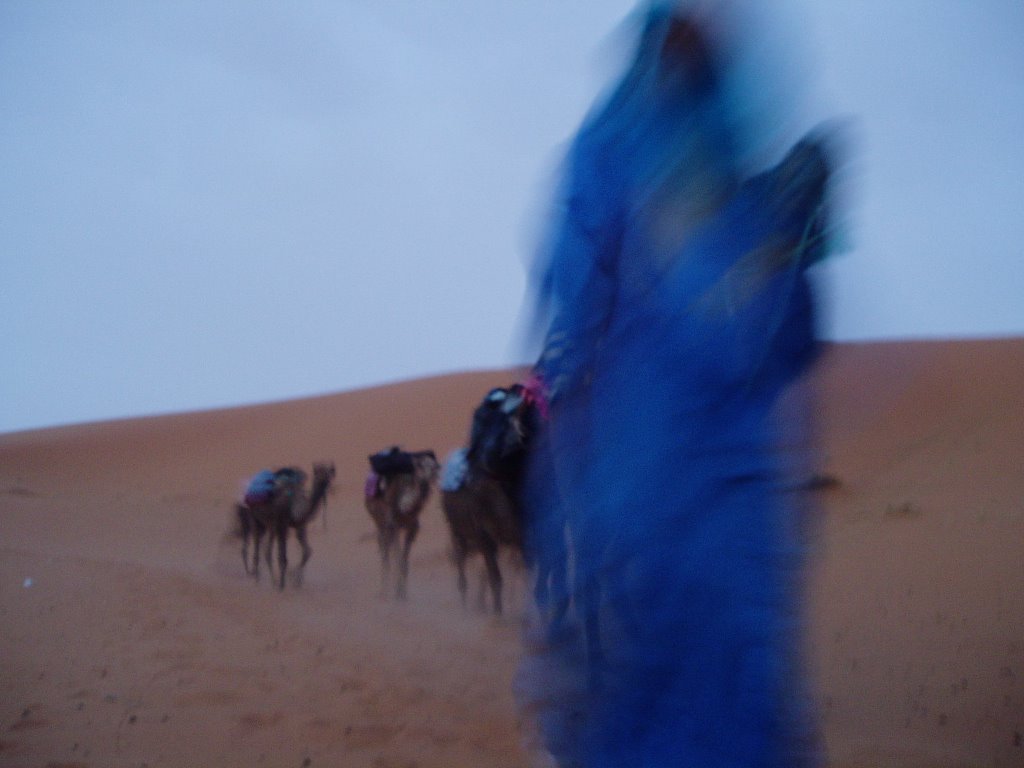
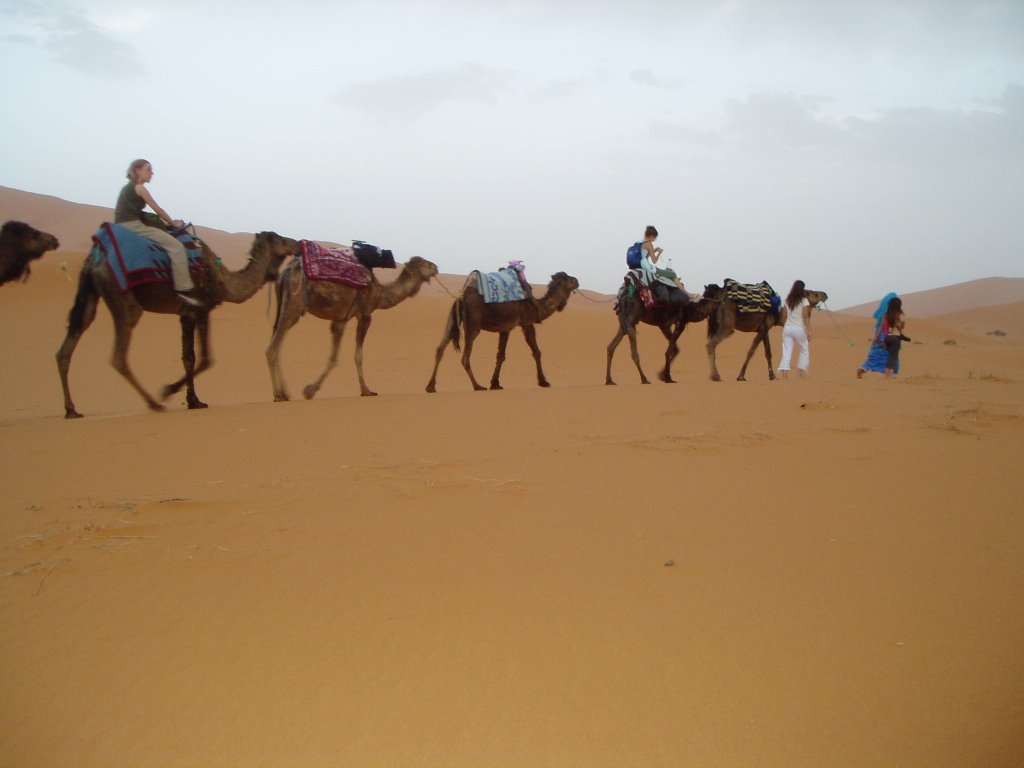
When we finally took off into the desert, atop our dromedary mounts, I was still a bit pissed off about the whole affair. I was at that moment prepared to be annoyed by everyone. I found myself angry at the guide, who seemed to treat us like an annoying cargo to which he directed neither words nor glances. Walking in front of the camels, holding the guide rope, he took short, choppy strides and moved us through the desert as if we did not exist.

A short time passed, and all sorts of pains associated with riding atop a single hump began to to appear. I asked the guide to stop and let me down, gesturing that I would walk with him.

I was surprised by the guide, who, dressed in the local Berber attire had appeared to be much older. This guy was easily less than 20 years old, and to my surprise, seemed to be smiling and happy to have company for the walk through the hot sand. And so we walked together the rest of the way, somehow understanding eachother in a mix of Spanish, French and Arabic, laughing and making jokes and having a great time. This guy, Moha, quickly decided that Christophe was not a suitable name, and I was rebaptised with the Berber name Freksh, which was to stick with me for the rest of the trip.


We spent the night outside a typical Berber tent, sleeping under the seemingly endless dome of stars. Luckily the weather had cleared up by the time we slept, for a short while before dinner, the skies had opened up and let loose with a raging torment of rain and sand, once again giving us the rare opportunity to experience an excessive amount of moisture in the arid desert environment.

We left the desert the next morning, once again riding our camels and then driving across sand flats and through sandstorms in a decrepit Land Rover. Arriving in Rissani, about an hour away, we bought tickets for Marrakech, ate some food, and got on the bus, ready (more or less) for the 12 hour journey before us.

When we got on the bus, we were among the few passengers, but as the transport stopped in every town between us and Marrakesh, the seats quickly began to fill with passengers. At one of the many stops in the first half hour or so, an entire musical group joined us in the back of the vehicle. They were dressed in traditional garb--djilibas and hats, and carrying a variety of instruments--djembes, huge tambourines, horns, and other unknown types of drums.

Within a few minutes, the group, evidently returning from a performance, had begun to play their drums and sing. The entire bus looked back with interest, and we were quickly made to join in the festivities, clapping and singing along. The girls were repeatedly asked to dance, I was asked to sing, and at one point I joined the musicians with my guitar and we performed an absolutely unique Afro-American version of the Italian anti-fascist song, Bella Ciao.

At some point in all of this, the musicians began to invite us to stay with them in their town, as there was to be a festival at which they would be playing. We demurred, explaining that we had already bought tickets to Marrakesh. We were invited again, and again said no. At some point during the musical performance, we all came to the conclusion that we would join the group, that we would happily give up money paid for our ticket to join these friendly folk in their town.

We all descended from the bus at the same time, stepping out onto the side of the road. Following the musicians into their village, we walked down dusty streets past houses of concrete and adobe, avoiding mud puddles with their direction and assistance. Where, we wondered, could this festival possibly occur? Their was no sign of any celebration at all. We sensed something strange--not dangerous, just strange--about this whole affair.

We arrived at Abdou's house within a few minutes. Strong, tall, and very dark, Abdou was the obvious leader of the group of 18-20 year olds. He ran the entire group like a general, giving out orders that were happily obeyed by all around him. "Get that bag," he would say, or "close that door," and his friends would scurry to fulfill his orders. After we settled in at his house, we quickly discovered that these orders were not limited to his friends, and we all found ourselves in the awkward position of being ordered to brush our teeth, wash our face, eat more, drink milk, stop smoking, follow me, go to bed.


As we also quickly discovered, the "festival" which we were to attend was a concert on Abdou's rooftop made especially for us. Their were no screaming fans, no wild dancing in the audience, no street vendors hawking greasy wares. The festival was us and them, and there it ended.

We took it in stride, as it was obvious that these guys meant us absolutely no harm with their little "festival" lie. On the contrary, they treated us like kings, making us dinner, playing music for (and with) us, laughing with us and at us.

After dinner, we settled in to watch some television with the group. Most of the people had gone home by now, and only a core number remained. Abdou summoned me to his room and gave me a djilaba to wear to bed, and placed a Fes-like hat atop my head. Seeing me like this, he was inspired to begin to call me with the (for me tongue-in-cheek) honorable title of Haj, a title reserved for those who have made the pilgrimage to Mecca.

My name now became Haj Driss, as earlier in the evening I had once again been baptised. I was now known by the name Driss (Haj Ddriss), Sol was Champs, Veronica had become Fatima, and Roseangela Najet.

We ended up spending an entire day with the group, and while we may have originally balked at the subterfuge required to lure us to their house (note: the possibility, however small, does exist that he whole thing was caused by a linguistic confusion, but much thought on the matter has pretty forced me to discard the idea), the treatment we received was more than enough to endear us to the group.

On the morning after the "festival", after a delicious breakfast, we headed out into the town for a tour. We saw the kasbahs, the old fortress-like structures that made up the old town, now abandoned. We walked through fields of olive trees, followed by the town's children. The guys taught me Arabic words and then forced me to use them on the locals, occasionally elbowing me and saying, "tell this guy good morning," or "tell this kid you have no money for him."


After seeing the town, we headed out to the house of Driss's family, for a delicious couscous with his mother and sister and his sister's children. The family was incredible, friendly and welcoming. The mother made the couscous on the floor of the kitchen, mixing the steaming grain by hand and baking bread in a clay oven. The whole family joined us to dance and sing and eat. We were all invited to return.


We ended up leaving a few hours after the meal, finally ready to take the journey to Marrakech. Tears poured from many eyes (not mine, as I'm one hardened soul), and I was made to promise that I would return within a week (which I will do). Until then, here I am, in Marrakech, hot, sweaty, happy and, as of yesterday, newly short-haired.

See you soon.
04 June 2006

Er Rachidia

Very little time to write at the moment, and I have many photos to share, so this will be a short entry. More to come soon.

For now, I will merely say that my three Latin lady friends and I have met some of the kindest, most open people that I have ever known. So kind, in fact, that we got off our bus (destination Marrakech) here last night and stayed with one of them in his family's house.

We are now on our way to Marrakech (at least that is the plan), but I will be returning here in four or five days. I have been invited to stay in their town for as long as I like, and I have been made to promise that I will return.

And so, all plans to study Arabic in Fez have been thrown away like so many sunflower seed shells, lost in the dusty streets of the suburbs of Er Rachidia.

Tomorrow I will write about the whole affair. I hope that all are well and thanks for your comments.

31 May 2006

FEZ


The land of the famous hat.

I arrived here last night with some new friends, two Argentines and a Guatemalan-Canadian. All three are girls, which has made certain walks quite interesting. An example of the type of conversation men enjoy having with these ladies:

"You come to my house, I give you a massage? Do you want some aphrodisiacs? One man from Morocco can handle at least three women."

I generally have the choice to laugh, ignore the whole thing, or act stern. The last choice usually seems the riskiest of all.

Still, the city is great, and in many ways the typical Moroccan city, comprised of thousands of winding, confusing, endless streets. The medina, or old city, is divided into hundreds of different sections, and one can easily get lost and see nothing but fish for ages, or leather, or meat....

The place is crazy.

One thing that is honestly beginning to drive me a bit crazy is the call to prayer. I have always enjoyed this sound, which emanates from every mosque in every town five times a day. The problem is that, as the hours of sunlight and heat change, so too do the times of the call to prayer.

Unfortunately, it would appear that the first call to prayer at this time of year is approximately three in the morning. And so my sleep, day after day, is destroyed by fifteen minutes of singing at three a.m. This was, at first, quite "interesting", but has very quickly become a part of the local color which I would much rather sleep through.

Needless to say, I am drinking a lot of coffee.

Besides this, things continue to go well, and I hope to begin looking for a place to take some Arabic classes soon. Also, on Friday begins a ten day festival of Sacred Music from around the world, so this should be a great city in which to spend some time.

Anyway, that is all for now. More soon.

29 May 2006

How quickly things change...


How quickly things can change.

As of last night, I was done with this city, ready to get somewhere where I could avoid, perhaps just by sheer numbers, the constant throngs of people dying to get me stoned or check out their shop.

I went to sleep last night wishing hard for a change of venue. A pillow never felt so much like a rock, the air was never so stifling.

I had bad dreams all night, and awoke with a headache and strange stomach cramps and a bad taste in my mouth. I had been tossing and turning ever since the 3 a.m. call to prayer, which had sounded from every mosque in the city.

I stumbled to the bathroom, washed my face and brushed my teeth, and headed out into the still quiet main square for something to eat and some coffee. The banks were still closed and the ATMs were far. The restaurant owner offered to start a breakfast tab for me until the banks opened.

And then, the ATMs would not work and the bank personnel could do nothing for me. I headed back to the cafe to drink more coffee, clear my head, and think of an alternate plan of action.

When I returned to the closer of the ATMs to give it another try, I noticed a foreign woman walking toward me. She held a bank card in her hand and carried a heavy look on her face. Ahhh...wonderful. I knew that the second of the ATMs would not work either. I decided to try anyway.

As I did, she approached, obviously wishing to give it another try. We stayed together, trying repeatedly until we both were able to withdraw money from the machine, and then began heading back toward the main square.

As we walked, she told me how much she loved the city, and talked endlessly of how wonderful the people were and how beautiful the place was. I thought of how ready I was to leave. She continued, and told more and more stories of walks she had taken and people she had met...And suddenly, I could see the place through her eyes.

I decided to stay another day.

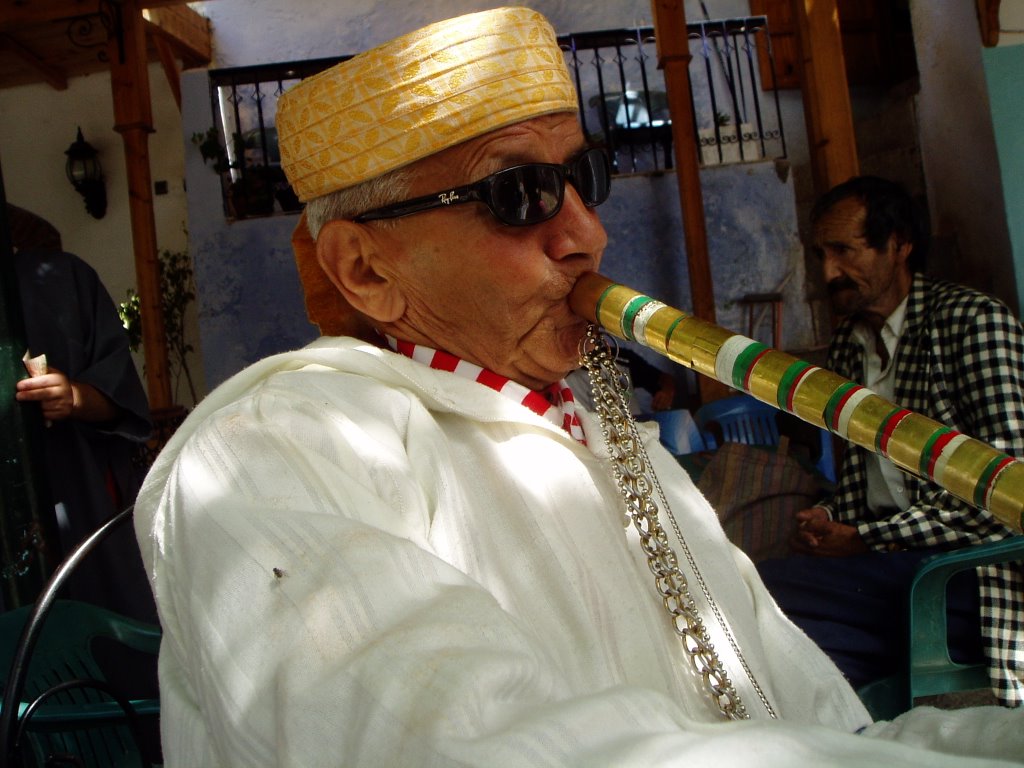
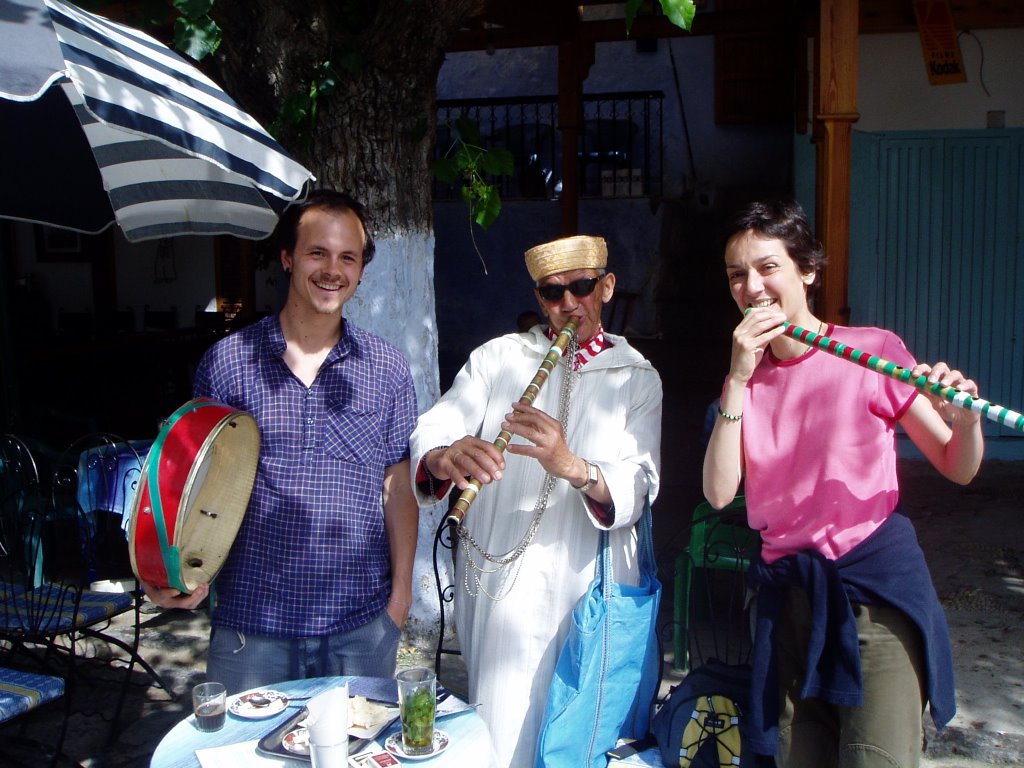
We had breakfast in the square, and ate the local goat cheese from the mountains. We sat with a musician and played drums with him while he played the flute. She left a while later, and I stayed behind, ready to give the town another try.


I ended up heading out for a walk in the same direction that I went a few days ago. Back toward the crumbling hillside mosque I walked, and soon ran into some people I had met at the hotel--two Argentine girls and a Guatemalan girl. They were accompanied by a short Japanese guy and a Moroccan guide.

And so we walked for hours, passing through the fields of marijuana and past herds of goats, stopping at the now familiar mountain spring of icy cold, delicious water. We kept going, and passed through valleys and over hills, until we reached a town miles away. The sun was relentless and sweat poured down my face, but the landscape was beautiful and everyone that we met was friendly, and I do not think I experienced a single uncomfortable moment.


Strange country this surely is, and while I am well aware of this by now, I am constantly surprised. On the way back, I began walking rather quickly, and soon left the others behind. As I came back near to the spring, now without water and truly yearning to wet as much of my body as social conventions would allow, I saw a guy sitting beneath a tree on the side of the trail. He invited me to sit with him, and I scrambled up the hillside and sat down.

Placed in his lap was a portable black and white television with a broken antenna. A wire strung from the back was connected to the two contacts of a car battery. He was watching mostly static, but behind the static I could see the blurred outlines of a tennis match. He pointed at the screen and said, "basquet". I pointed and corrected him, saying "tennis".

Thankfully, he unplugged the set immediately, and began to give me an Arabic lesson. This was the first person I had met on this trip that did not seem to speak any Spanish or French, and so we stumbled through the rudimentary aspects of a conversation, eventually getting down our names and nationalities. I sat there in the relative shade with him, learning the Arabic word for water, and how to say "I go to Chefchaouen". Occasionally, he would plug the TV back in to check that the picture had not suddenly become crystal clear. Of course, it never did become clear, and as soon as he was sure of this, we would continue the lesson.


I left after a bit, and headed back into town with the others, and as we entered, I thought about how much I liked the place, and how nice so many people are. I saw people I knew, and enjoyed a great meal with my South American friends. And later, after a shower, sipping a mint tea on a rooftop terrace, I just thought of how much things can change and how much another person's vision can become your own.
And so, tomorrow I head to Fez, maybe.

28 May 2006

Chefchaouen

Yesterday morning, after four hours of sleep and a few cups of coffee in a bar frequented by truckers and prostitutes, I left Algeciras.
I took a boat through the fist-clenching Strait of Gibraltar, walked across the border into Morocco, and took three separate taxis until I arrived in the mountain town of Chefchaouen.

This town was originally built as a stronghold against the invading Portuguese in 1472, and soon after, became the home of the Jews and Muslims fleeing the Spanish Inquisition. Christians were banned from the city until the 1920s, when the Spanish colonized the area. Those Christians that did enter the city risked the rather hefty penalty of death if caught therewithin.

The town is now most famous for its agricultural pursuits; which, much to the chagrin of the European Union, continue to be concentrated on the highly exportable crop of the finest grade of kif--a product manufactured with the Cannabis plant.

The place is beautiful--a collection of tightly packed houses and winding alleyways. Many of the houses have been painted a strange color--something between the most blinding and brilliant of whites and the lightest of blues--popularized by the Jewish population in the early 1900s. The huge Rif mountain range rises on nearly all sides, monopolozing the views and insulating interior life.


Unfortunately, the one group that no mountains have been able to keep out is the international tourist set, which is stopped by no geographical border or obstacle. As usual, this influx of tourists has spawned a burgeoning population of hustlers and dope dealers. One has a tough time walking even a minute without the need to turn down an offer for hash or kif. Offers are constant to visit the "family's artesanal factory" and responses to the negative are often met with icy stares, hurt looks, and occasionally, only slightly veiled threats. To be honest, the onslaught is so widespread that I don't see myself staying here long, even taking into consideration the beautiful natural surroundings.


Yesterday, after walking around a bit and eating a delcious tagine de kefta, I headed up into the hills, wishing to see the town from above and explore a crumbling mosque visible from the city center. The mosque was built by the Spanish and effectively boycotted by the Moroccans, and while it has settled into a comfortable disrepair, it is still painted by the municipality, and boasts a pristine white-blue color.

As I sat atop the hill, struggling in my dehydration and exhaustion, I began to talk with a young Moroccan guy, Ali, and an older American couple, Carole and Wilfred. We spoke of the local history and third world-first world relations, and eventually we three Americans decided to take up Ali on his offer to tour the fields of the Rif's most important crop--kif.

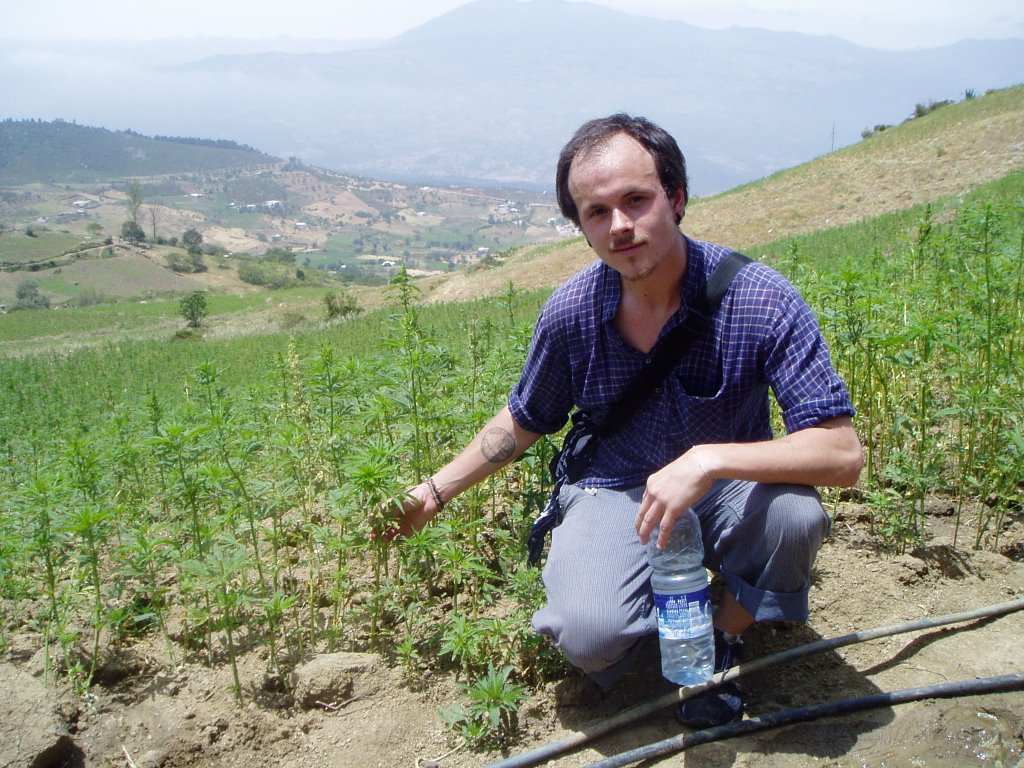
It is quite strange the way things work here in regard to the kif plantations. There is none of the Leo DiCaprio 'Beach' sort of secrecy about the work that goes on these hills. On the contrary, everything seems quite institutional, and taking a tour of the crop feels not unlike a winery tour in which one sees the plants, learns of the process involved in production, and is encouraged to try the local vintage.

As Ali explained to us, the plantations that we visited exist somewhere in the middle range on the scale of legal trouble. The big dealers, those that deliver to Europe and beyond, are very friendly with the police, and suffer little at the hands of local authorities. Very rural growers are likewise quite safe, as their isolation protects them. Small towns like the one we visited are generally okay, and their work is a very, very open secret. Those most at risk are small-time dealers and growers in highly populated regions. And so turns the world, as the fat cats build fortified mansions and the little man goes to jail.

So through the fields of waving green I walked with my new companions and our guide. I could hardly have asked for better company, as Ali was both knowledgable and friendly, and Carole and Wilfred were the most adventurous, open-minded, and vital couple in their mid-sixties that I have ever had the pleasure to meet.


I was amazed at how professional the entire operation is. A recent windstorm had ruined much of the crop, but what remained was well-tended and cared for. People roamed the fields, weeding and discarding male plants. Hoses and irrigation systems coursed through the land and homemade sprinklers [pierced garden hoses] spread the water. In addition to kif, I saw the fields of wheat with which local bread is made, potatoes, onions, and grazing animals.


What is so so sad and so interesting about this whole industry is the way in which international politics and locals laws affect the whole thing. For the local people kif is a normal part of life, not merely some sort of Bob Marley-loving, European thing. Kif is enjoyed by shopkeepers and shepards, men of all ages and professions. They smoke out of long, thin pipes, or spread potent hash oil on their cigarettes. This is part of their daily life, and has been for hundreds of years.

Big dealers and small hustlers are arguably only responding to a Western demand when they grow entire fields of the crop. They are then vilified, imprisoned and harassed at the behest of Western governments. It is, to be sure, a strange (and yet extremely common] state of affairs, and it doesn't seem crazy to think that a change in the laws or habits of the Western World would have a very positive effect on the situation here.

Tomorrow I head off for somewhere different, perhaps directly to Fez, where I hope to enroll in an Arabic class at a local institute. Until then, I bid you adieu, adios, and goodbye.

27 May 2006

Getting to Algeciras (26 May)

Bobadilla, Spain

I have just done some research into the name of this town "Bobadilla", and I have found that in the Middle Ages the name was given to certain areas designated as grazing areas for cattle (apparently the "bob" is like "bov" as in bovine).

Interesting.

I see the word much differently, however, and in a way much more fitting given my experiences in this town.

The Spanish language, like all Romance languages, has a noun form known as the diminuitive. The diminuitive, oddly enough, works just as one would assume, and makes things smaller. So basically, by merely adding an ending such as "ito" or "ico" or "illo", or their respective femenine and plural forms, I can make something big into something little.

For instance, if you have a house (casa) that is small (or somehow cute or endearing, as the diminuitive can also express this), we call it a "casita".

So, what then is a bobadilla? Well, a bobadilla is little bobada.

And what is a bobada? A bobada, put simply, is something that a bobo does.

And what is a bobo? A bobo is a fool, or dumbass, or idiot.

And so, a bobadilla is "a little thing that a dumbass would do"

Suffice it to say that the mere act of going to Bobadilla is, in and of itself, quite a foolish act. I am still not quite sure what I was doing there, expect that it had something to do with getting to Algeciras. I also know that every decision that I made yesterday was clouded by sleep deprivation and constant hunger, so I excuse myself on that basis, as well as on the fact that I did in fact finally make it to Algeciras yesterday.

Nonetheless, I cannot really excuse the residents of the town, many of who honestly seemed to be pretty stupid. I tried not to stare too much at the really strange ones, but I swear, this town had one church and at least ten bars, and I confirmed the existence of at least 6 total idiots and saw at least 5 photographs or paintings that featured shotguns.

But, all is well that ends well, I guess, and like I say I finally did make it to Algeciras, and today I made it into Morocco.

I'll write more later (or tomorrow) about the Algeciras to Morocco adventure. Right now, the sun is shining, coffee is calling, and this keyboard is driving me friggin crazy.

18 May 2006

One Week

One week from today I will fly from New York City to Madrid. I will then board a subway, then a bus or two. I'll follow all that up with a boat ride across the Strait of Gibraltar.

When I get off the boat, I'll be in Morocco, where I will be spending the next five weeks. But before I have the chance to sip tea and stroll through verdant mountain towns, there is much to be done.

Bills to be paid, rooms to be vacated, friends to see, tickets to be printed, bags to be packed.

More from Morocco.

08 May 2006

More news...

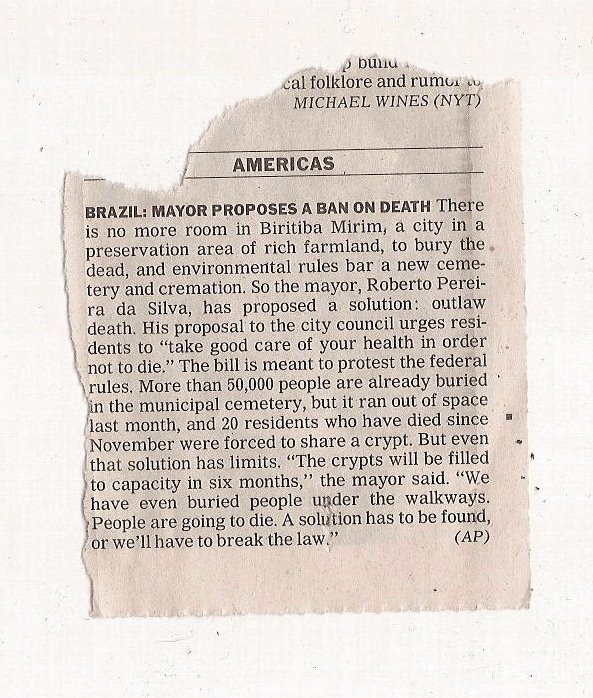
All is quiet here, so I thought I'd share another interesting piece of news from the New York Tiimes. I forget the date that this appeared.

06 May 2006

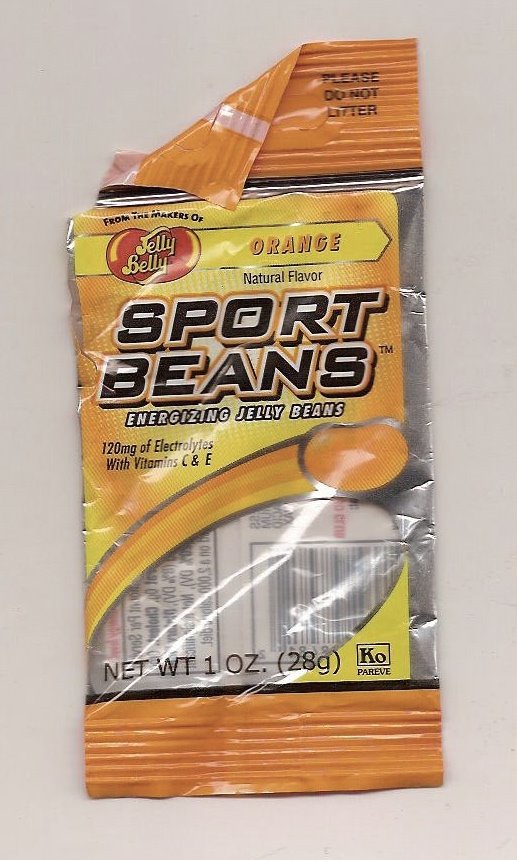
Get Energized!

New to the Revolutionary idea of turning every possible type of foodstuff on the market into an idiotic "Energy" provider:


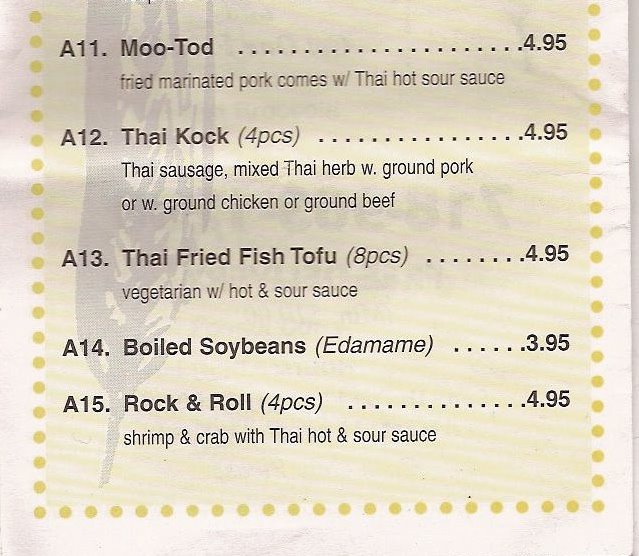
And...I'm not sure if I feel comfortable dining at the Thai restaurant responsible for menu item number 12:


In other news...

I leave for Morocco on May 25th, 19 days from today. I will be there for approximately five weeks.

Work is almost over, trees are blooming or bloomed, the sun is shining. Brooklyn hipsters are slowly attempting to peel off their jeans and slide into something a little more comfortable. David Blaine is stuffed inside a fishbowl in front of Lincoln Center.

04 May 2006

Strange News

As reported today in the New York Times "World Briefing"

THE PHILIPPINES: JUDGE SEEKS REINSTATMENT A judge who claimed he could see into the future and admitted consulting three imaginary mystic dwarfs has asked for his job back after being fired by the Supreme Court. "They should not have dismissed me for what I believed," the judge, Florentino Floro, said after filing his appeal. (Reuters)

03 May 2006

A Day Without a Mexican?

In 2004, the director Sergio Arau released a film entitled, "A Day Without a Mexican." From a critical and artistic standpoint, the movie was a complete failure--the acting was terrible, the dialogue was flat, and as one IMDb reviewer said, it had "the subtlety of a brick."

Nonetheless, the premise of the movie was interesting--one day the people of California wake up, stretch, scratch themselves copiously, and look around to find that all the Hispanics of California have disappeared. They're just plain gone. Fruit rots in fields, rich men walk around in dirty clothes, restaurants close, and riots begin. The entire state, isolated by a (once again very subtle) mysterious cloud of thick mist, goes into a panic, and finally realizes the extent to which the Hispanic population supports every aspect of their lives.

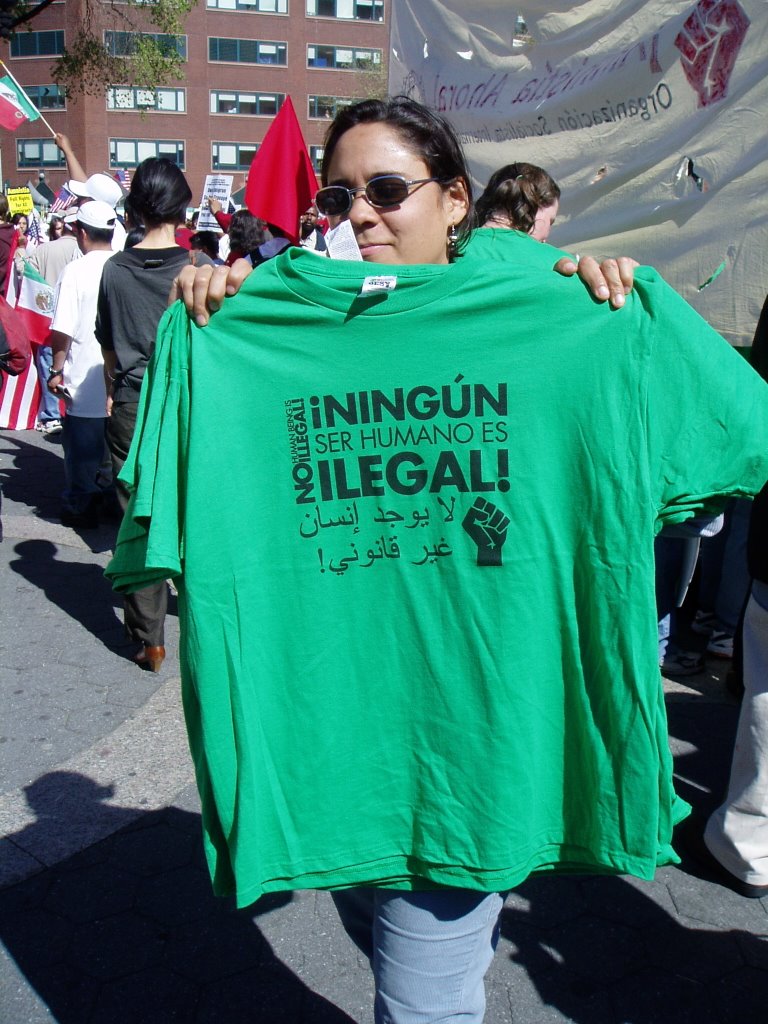
This movie, lame as it is, has been getting a lot of attention lately, fueled by the plans for (and recent happening of) the May 1st economic boycots and demonstrations. Certain groups of immigrants around the country called for what was billed as a "Day Without Immigrants". They advocated worker walkouts, boycots, marches, and the construction of symbolic human chains.

Obviously the press was all over this story, and everyone, of course, had a different opinion. The liberals are talking about how this is like the civil rights movement of the 21st Century (the metaphor doesn't quite work) and the conservatives are freaking out because there were too many Che Guevara t-shirts and foreign flags. Everyone's going nuts.

Now, I'm no political pundit, but I'd like to consider a few things:

1. We shouldn't worry about Che Guevara t-shirts. Relax, Communism has been defeated, Che Guevara is dead and resurrected in the form of cotton haberdashery. Ask people wearing the shirt where he was born, what he did, how he died. Most won't be able to tell you.

2. Regardless of one's political opinions and leanings, it's important to realize that there is next to nothing that we can do to stop illegal immigrants from entering the country (for an interesting explanation of some of this, check out Piero Scaruffi's web page). This is a rich country and Mexico (the source of the majority of the immigrants in question) is a poor nation (or better said, a nation with many poor people and very few extremely rich people). People will always cross the border. There will always be immigrants pouring into the country. And you can't kick 'em all out. It would take too long, this country really would go to shit, and it would cost too much money. And it would pretty damn mean.

3. Most economists that study the issue agree on the fact that the average worker is really barely affected (if at all) negatively by the presence of illegal immigrants. In fact, some economists have even said that the presence of immigrants is beneficial to many workers. People always talk about how much immigrants "take from Americans." What about all the stuff they buy and the taxes paid by many (obvious many do not as well) of them?

4. Everyone's freaking out about how many foreign flags are flying at these protests. Have these people ever taken a walk down through Little Italy? How many Italian flags do you see?

5. Finally--and I'm no conservative on the immigration issue--there is one point on which I think that I nearly agree with conservatives (or at least disagree with certain liberals). This is certainly not the 1960's Civil Rights movement all over again. Whether or not one supports making illegal immigrants citizens (I do), there are serious differences that must be considered between these two movements:

A. Illegal immigrants are not citizens, but in fact do benefit from many rights afforded to citizens (ie healthcare, education, etc). Blacks were citizens, and were not afforded many of these rights.

B. We all piss in the same place, drink water from the same fountains, and ride wherever we like on the bus.

C. Blacks were brought over here as slaves from Africa and then mistreated continuously for hundreds of years. Mexicans were not (except in certain terrible circumstances) brought over.

Whatever...like I said, I'm no political pundit....I just think that it's important not to distort the present or the past, but rather to look at the question at hand.

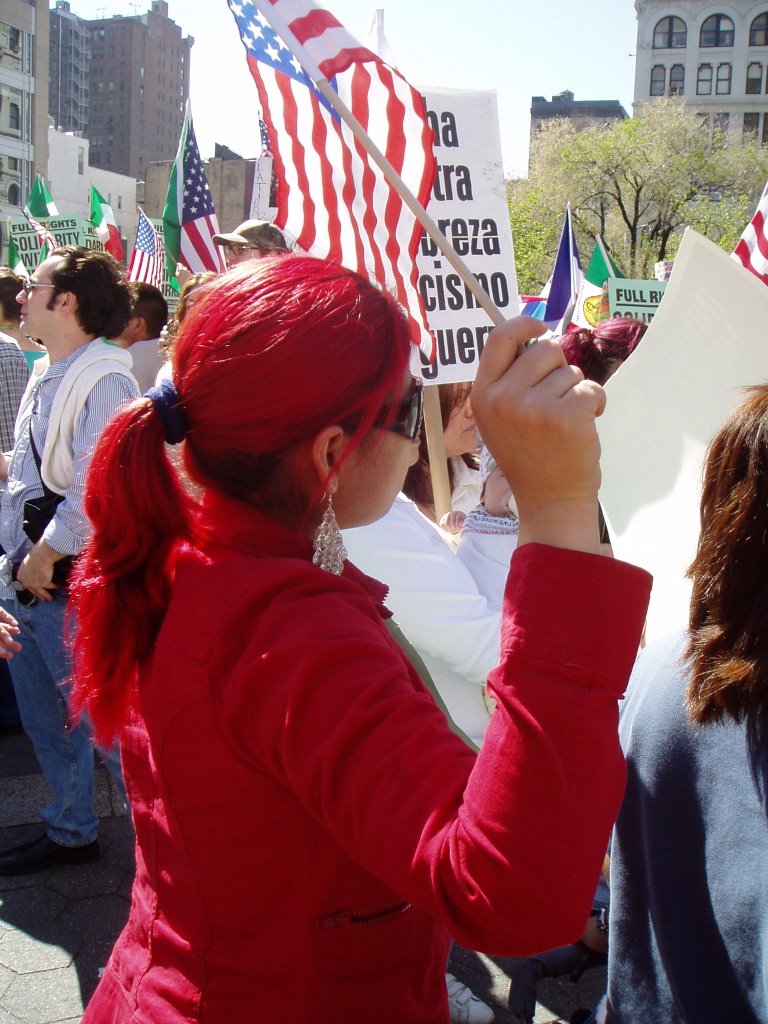
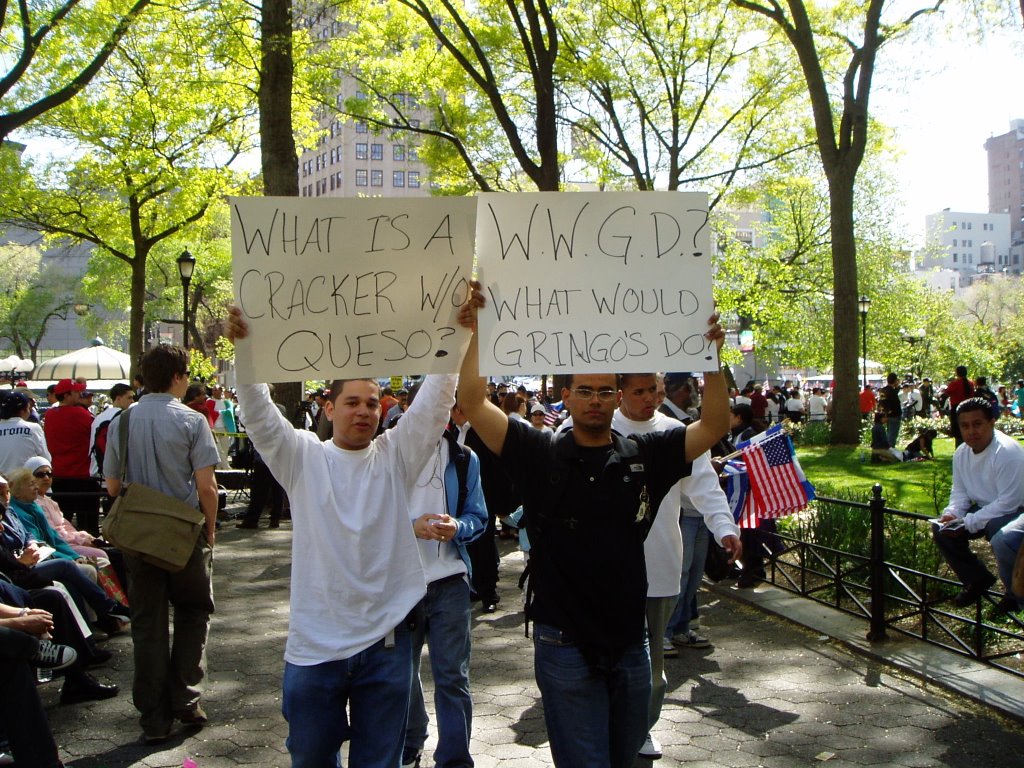
Anyway, I took a walk down to Union Square the other day to check out the protests. I was only there a little while, as it was hot as the dickens and really crowded, but it was a great time. People were cheering and singing and chanting. Babies and mothers and men and children were there. It really was a pretty exciting atmosphere, and it awed me to think of the number of people risking their jobs and deportation to fight for a better life and a citizen's rights here. (note: non-ironic statement)

After milling around with the people for a while and taking some mental notes, I noticed a couple of interesting things:

A. Communists all dress and look the same (I saw a few handing out copies of their newspaper and pamphlets and whatnot).

B. Some people just love protests--There were people there protesting all sorts of stuff that had little to do with questions
regarding immigration, unless you really stretch the issues at hand. I saw, for instance, people with anti-Imperialism posters and people with (the ubiquitous) Che Guevara t-shirts, and one guy in a military uniform, wearing a gay pride pin and a brandishing a sign against the war in Iraq. No wonder us lefties piss off and confuse so many people--we can't just stick to the damn issue at hand.

C. It was hot as hell.

I finally gave in to the concerted dual attack by Mother Nature and Senor Big Crowd Anxiety and retired to the cool and relative quiet of Whole Foods for a cold juice and a bird's eye view of the protest. And that's that.


24 April 2006

Braising and Slow Cooking

I've decided that this week is the Chris Bond Semi-Annual Week of Braising and Slow Cooking.

A strange decision perhaps, but I'm of the opinion that next week's theme (National Uncommon Fowl Week) is even stranger.

My friend Adam and I kicked off the week yesterday with a down home pulled pork barbeque sandwich. This was Adam's recipe, and I give him all the credit for the ideas, as well as most of the work, but I did help tear the pork up into tiny, itsy bitsy little pieces. So I get a little bit of credit.

The meat of choice for this recipe was (and, presumably still is) a pork shoulder. The best part of this, maybe even better than the fact that it tastes so good, is that an absolutely huge piece of meat (pigs are big, and so are their shoulders) only runs about three dollars and fifty cents. Our whole meal, in fact, which could have easily fed five or six people, only cost about six bucks.

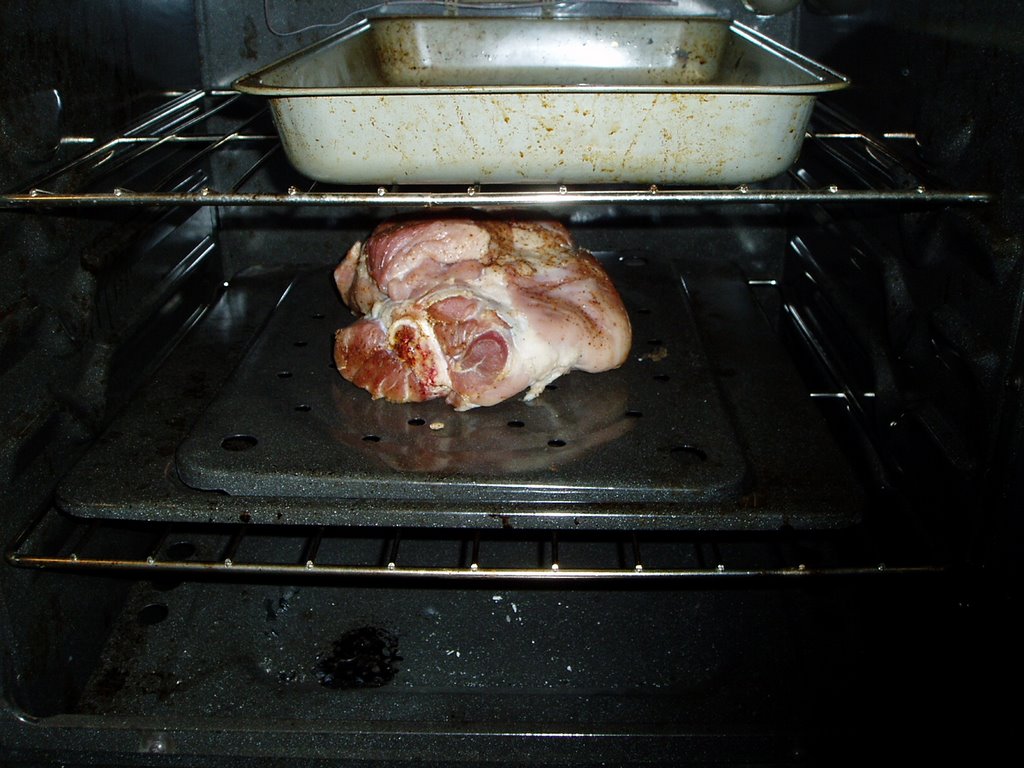
We bought the meat just down the street, which was a good thing, because the damn thing weighed a ton. After lugging it home, we cut off the skin, trimmed a bit of excess fat, heated the oven to about 300 degrees, and stuck it in the oven. We then sat down and watched a movie.


Three or four hours later, we got to work on the sauce. Now, a good pulled pork should be saucy, but not dripping--at least that's what I say (standing tall atop the soapbox of my extensive experience-- which involves two sandwiches). The sauce we made was basically a homemade barbeque sauce. We first started with a preliminary mix that contained the following ingredients:

vinegar (1/4 cup)
brown sugar (handful)
A1-type sauce (couple of 'dashes')
chili powder (some shakes)
cayenne pepper (some shakes)
Tabasco (some 'dashes')
mustard (about a tsp)

Next, using a couple of tablespoons of olive oil (apparently it's better with bacon fat), Adam cooked up some finely-diced onion and garlic. To this heating mixture, he added a can of tomato puree (none of that nasty pre-spiced crap) and the vinegary-mixture.

Obviously, one must play with this, adjusting spices, etc, and making sure to put in any ingredients that I've forgotten to list. That, in particular, is quite important.

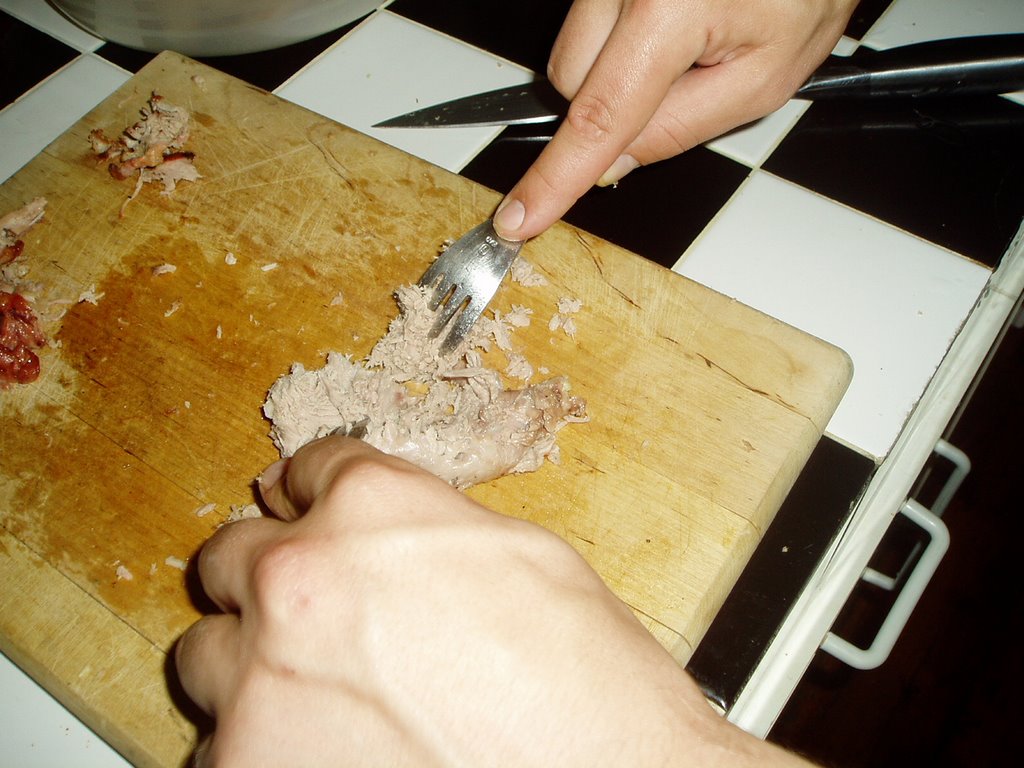
Now, the best part comes next. We pulled the shoulder out of the oven and delicious smell filled the air. Our next priority was to rip the hell out of the thing, tearing the meat off of the bone (a pig shoulder is much like our's--ball and socket) and getting down to the shredding and pulling. Which, I've now learned, is why it's called "pulled pork".


After we got all the pork pulled (and I got over my own lame double entendres and punning), all that was left was to mix up the sauce and meat, cut some nice, thick slices of crusty Italian bread, and get down to the eating of the sandwich. Unfortunately, I was too hungry at the time to remember to take a photograph, but I did take one today of some of the leftovers, just to give an idea of what it looked like in the end. Granted, it sort of looks like dog food, but I think pulled pork is supposed to look a bit like dog food, and it certainly tasted good. No sir, not a bit like dog food.

22 April 2006

Dinosaurs


So much time has passed, and with it has passed the need to be overly verbose about the happenings missed. So let me be brief. A friend called me a few months ago, sounding dejected. I asked her what was wrong, and she quickly let me know that the cause of her sadness was that she "[would] never have a dinosaur."

I responded as any sane person would, asking if she was drunk, or perhaps stoned.

"No," she told me. "I was just sitting here, sort of sad, and I started daydreaming, thinking about riding atop a brontosaurus, him eating leaves from the tops of tall trees. It was beautiful, and silent, and there was nobody there to bother me."

"And then," she continued, "I got much sadder, thinking and realizing that I'd never have a dinosaur."

"Draw one," I told her. "Color it brightly, vibrantly green, and hang it on your wall."

"I will," she replied, sounding half-convinced.

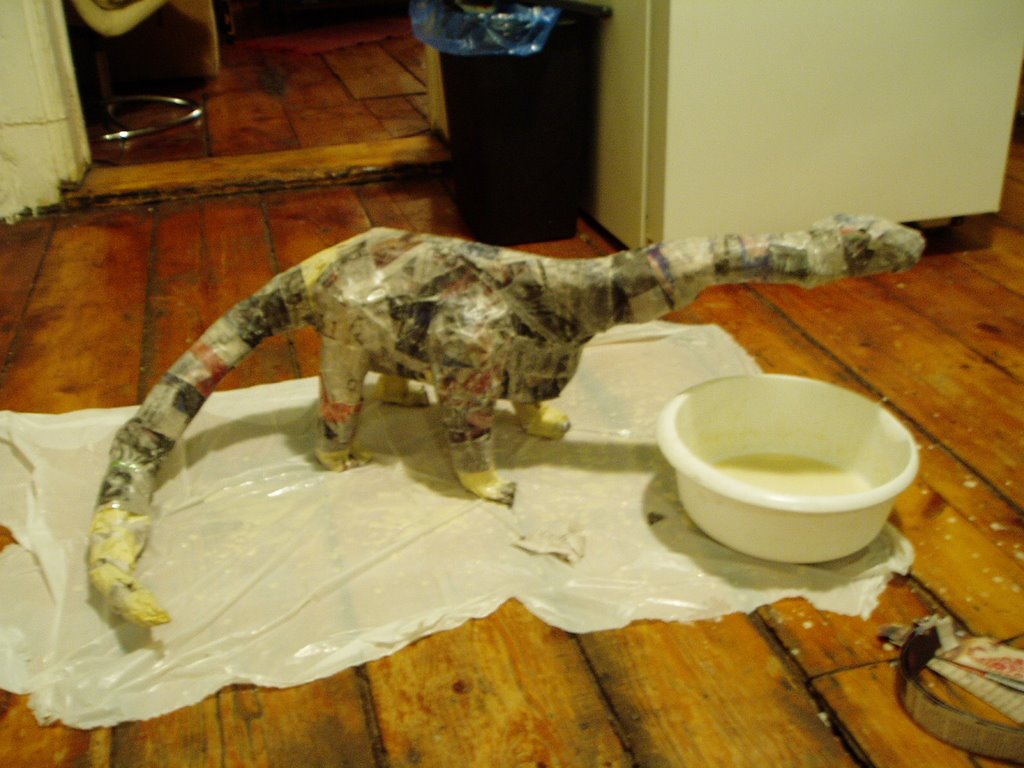
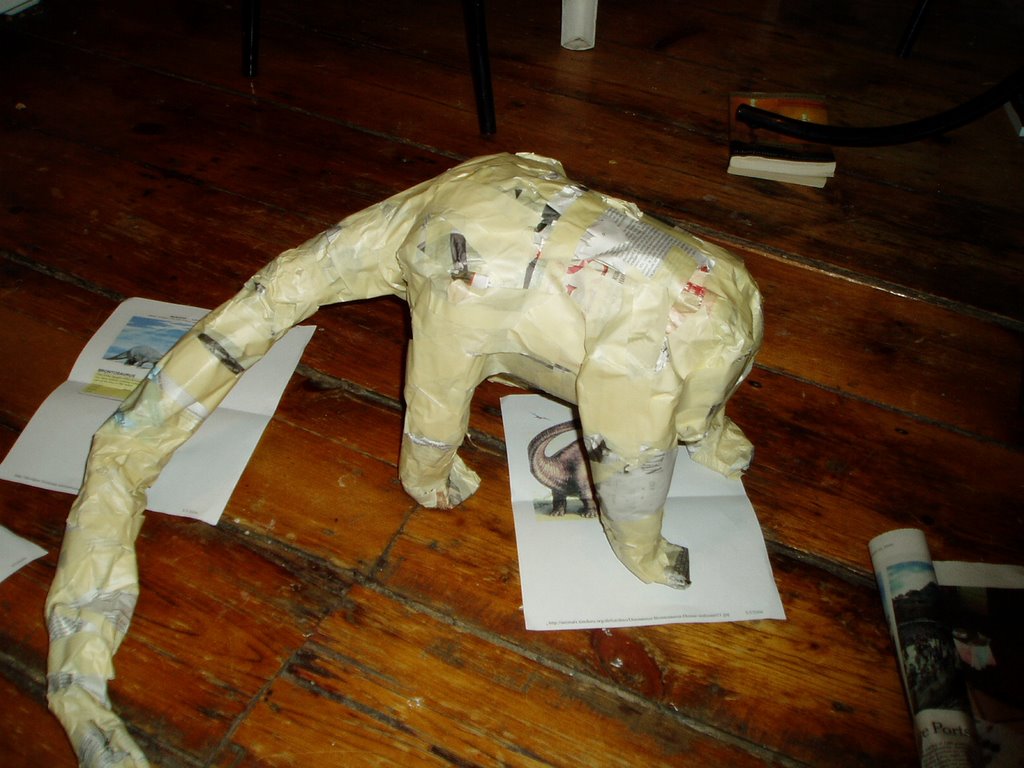
I returned home that day with my plans already in motion. On the way home, I had bought some white flour and a roll of tape. I was still floating on the success of my recent paper mache project, and I had heard, in my friend's words, an absolute need for my mache-ing skills.

And so I got to work.


I had done a quick search on the internet, looking for drawings of a brontosaurus. I had found a few, although most were overly 'cartoony." I did find out some interesting information, however, like for instance the little known fact that the brontosaurus never actually existed! Apparently, some paleontologist discovered a dinosaur that had already been found, mixed up a few bones, and convinced himself (and the world for quite some time) that he had found a new dinosaur.

And so, I set about to making an Apatosaurus, pretending that I was making a Brontosaurus.


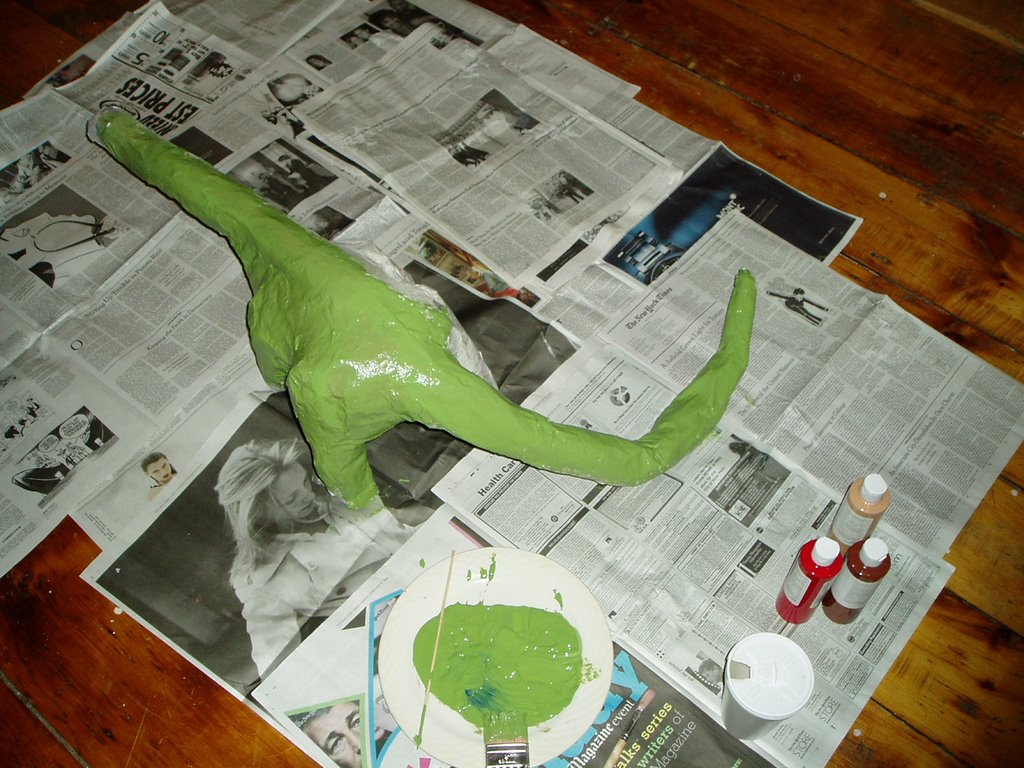
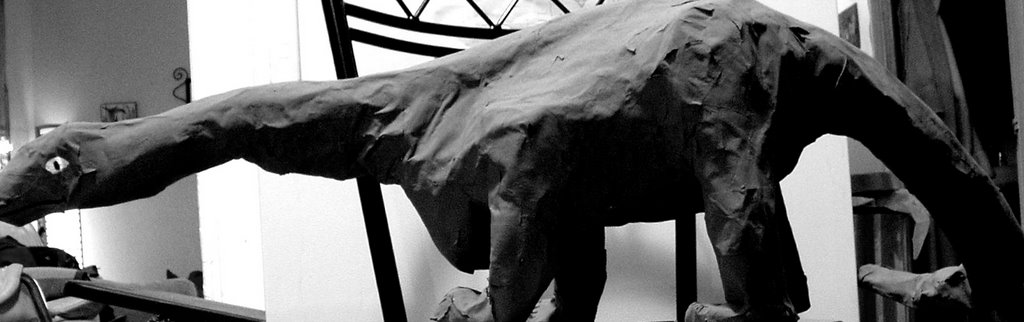
Within a short time, I had made the dinosaur body, using the same paper mache techniques as I had used on my previous project. I had picked up some paint and brushes at an art store downtown, and so with the help of my roommate, got to mixing up the perfect green color for the dinosaur skin. Soon, he was looking great.


Now, after having completed the dinosaur, I was dying to send it off somehow. My friend's birthday was approaching, and I felt sure that I had to find a way to get this green creature to her house on time. I brought the dinosaur to my parents' house with me (imagine the looks on the subway), planning to mail it from Jersey before heading to Canada. Unfortunately, i soon found out that dinosaurs are quite expensive to mail through the US Postal Service or any other conventional means. I was already out the door and on the road however, so it looked as if Dino would be traveling with me.

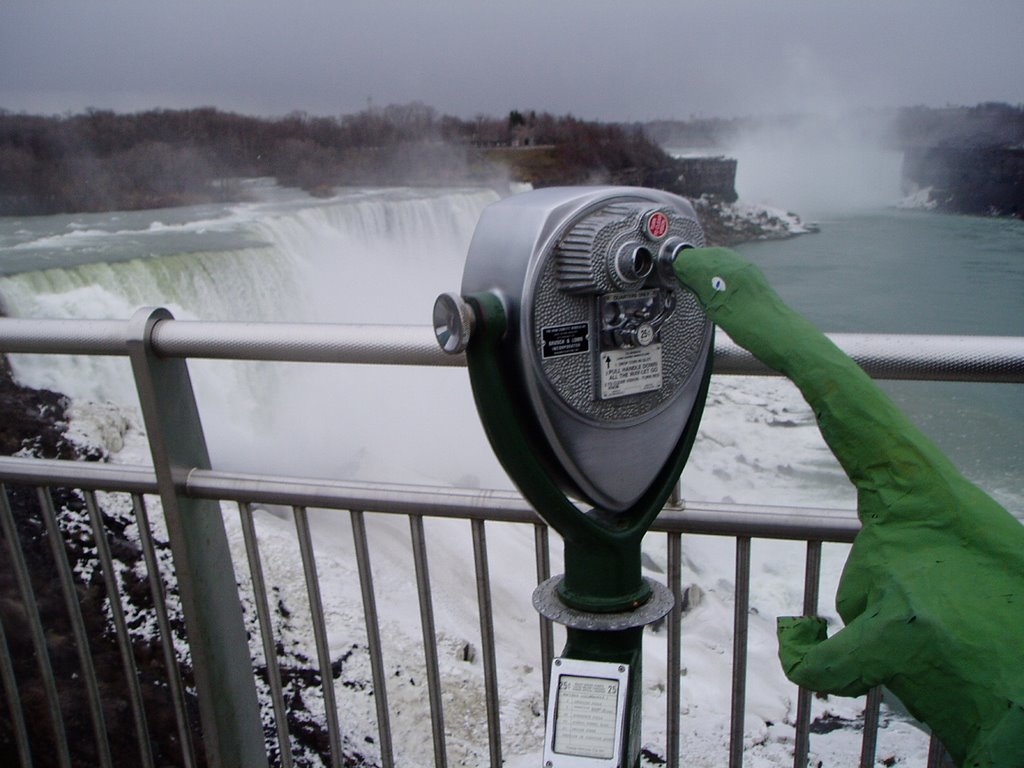
Bulky as he was, Jacques (as he was soon named) made a great travel partner, and took the opportunity to get in a bit of sightseeing. He particularly enjoyed Niagara falls, although the mist from the falling water made his skin color run off of him at an alarming rate.


The terrible thing about all of this was that I felt as if I were living a double life. I mean, Jacques was a new friend and a proud personal creation. He was traveling with Adam and I to Canada! He was checking out the falls with us! And still, I could not make this friendship, nor our shared experiences, public knowledge. I needed to get the dinosaur to its proper owner before I could alert the general public.

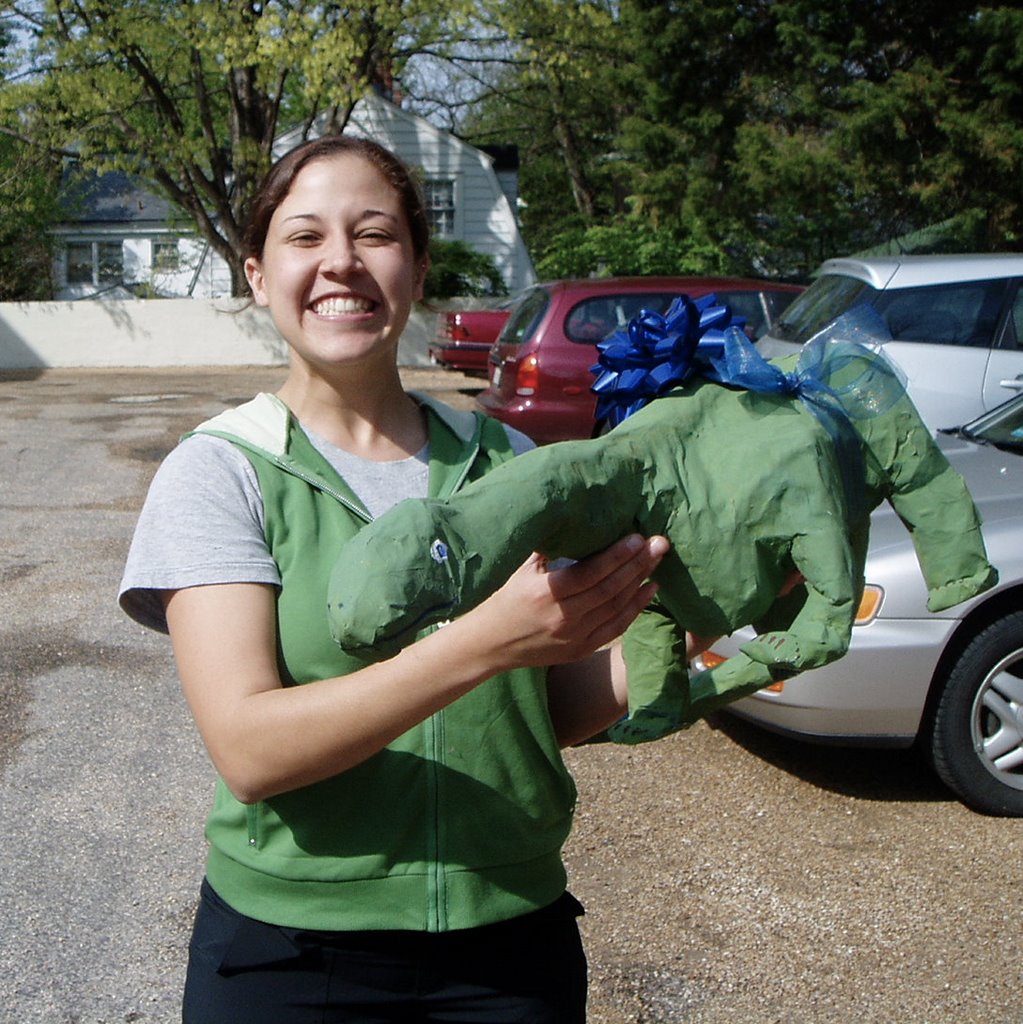
Finally, this past weekend I had my chance, and took the opportunity offered by an Easter Break to deliver Jacques down to the birthday girl. And in the end, he only arrived a week late, and only slightly worse for the wear as a result of his constant travel.

She loved it.

19 April 2006

Almost Time...

I went out of town this weekend for some camping and to celebrate a friend's birthday. I've got plenty to tell and pictures to share, but I'm having a problem with my computer. Well, not a problem with my computer, more a problem with me forgetting cables and chargers and power cords and the like all over the world. Not to mention a phone or two. Nevertheless, within a day or so I should back up and running and I'll post photos and stories galore.

12 April 2006

Down to Dixie

Tomorrow I head South to Charlottesville, VA, away from the smog and the bustle of the city.
I've been MIA recently with the blog, as I'm hard at work on genealogical research, and haven't really lifted my eyes from old copies of the US Census or moldy photographs long enough to see anything worth commenting on.

I am builiding up a wealth of interesting stories, however, so there's plenty to tell as soon as I get around to telling it.

But not tonight. There is this, though, from today's New York Times:

"SOUTH AFRICA: CASE CLOSED. BEANS GIVE YOU GAS. The country's Advertising Standards Authority ruled that eating beans leads to intestinal gas, rejecting a claim by the Dry Bean Producers Organization that a television commerical for Wildeklawer sweet onions was unfair when it implied as much. In the ad, a rugby team refuses to enter a locker room where one of its players is eating beans, while the coach pleads with the player to switch to the onions, which have "no tears, no burn and definitely no stink." The bean producers argued that the commerical negated its efforts to promote beans as a healthy food, but the standards group said that it was "objectively determinable factual reality" that people who eat beans pass gas."

You can't make this shit up.